
If any of you have followed my writing for long, you’ll know I bestow a grim power on plants. As nature’s first recipients of the Sun’s eroding energy they become destroyers of worlds. Before land animals evolved plants contributed to a mass extinction of almost all sea life. As Gavin Maxwell opined in the wonderful Ring of Bright Water: ‘there is always something a little stifling in this enveloping green stain’. English naturalist John Ray (1627-1705) is attributed to saying ‘Beauty is power; a smile is its sword‘ which might be a fitting way to explain the contrariness of plants. They beguile us with beauty while reserving their ability to incapacitate. Yet their unbridled power is also self-destructive. From an ecological perspective, orchids are seemingly impossible flowers made possible only by animals.
Orchids were not made by an ideal engineer; they are jury-rigged from a limited set of available components – Stephen J Gould, The Panda’s Thumb: More Reflections in Natural History.
By rights orchids should not exist because they live in the most diverse habitatsWhat is habitat for animals and people? Habitat, hence the word "habitable" describes the natural surroundings in which any animal (or human) lives, that houses basic needs, such as food and shelter. Vegetation, for example, is habitat for animals. On its own, habitat is not necessarily stable or sustainable, which is why it differs from an ecosystem. Habitat in disrepair More on Earth that are also (illogically) the most nutrientA substance that contains the raw materials for life. At a chemical level, these are contained inside compounds that are absorbed into the body and essential energy-containing molecules are extracted, so that energy can be transformed into other chemical processes that use the energy for living. More poor. In fact they didn’t exist until a new age of wildlife. They appeared about 90 million years ago just before a meteor hit Earth and wiped out the dinsosaurs. It wasn’t until 64 million years ago, however, that orchids developed pollination and then they truly diversified. Orchids spring, as if by magic, from rocks and bare sand to thrive in places few other plants would ever succeed.

Orchid flowers owe their entire existence to wildlife
It’s no coincidence that the age of land animals began on Earth about the same time orchids were having their evolutionary awakening. Herbivores began munching through the layer of other noxious plant waste. Left unkempt, this greenery would have destabilised the planet’s atmosphere and oceans once more. This is what makes animals special. Because, as I wrote about in How to Survive the Next 100 Years: Lessons from Nature, we are mobile and our intelligence is contained within a floating mind. Which means our legs and arms are vehicles for a collective consciousness. It’s connects us to all other animals (with which we share a common ancestor) and stabilises our world as we shuffle nutrientsEnergy and nutrients are the same thing. Plants capture energy from the Sun and store it in chemicals, via the process of photosynthesis. The excess greenery and waste that plants create, contain chemicals that animals can eat, in order to build their own bodies and reproduce. When a chemical is used this way, we call it a nutrient. As we More around.
The pyramidal structure of life we help create, ensures plants’ consumed energy doesn’t escape. A planet in harmony with itself, therefore, has immeasurable energy (nutrients) contained within animal-driven food chains. Even today, if you stick a probe in healthy soil or seawater, nutrients are hard to detect. You’ll find where animal life is most abundant it’s immeasurable in two ways. First, wildlife contains nutrition in immeasurably large volumes. Plus, where habitats are most diverse, there is a lack of any measurable surplus beyond this. Orchids seem to grow in those impossibly low nutrient spaces in between.
Victoria, a hotspot for impossible orchids
Orchids exist in places we would least expect a plant. Where animal activity is so intense, it’s a surprise any flower can survive the onslaught. Perhaps nowhere is this better demonstrated than the state of Victoria, Australia.
Victoria has a remarkably long botanic history extending back 423 million years to when the first land plants evolved: the Baragwanaithia fossils. These sprawling bushes stood about two metres in height. With a vascular system and woody tissue, they gnawed through rock, creating their own soil and spilling dead waste into the sea.
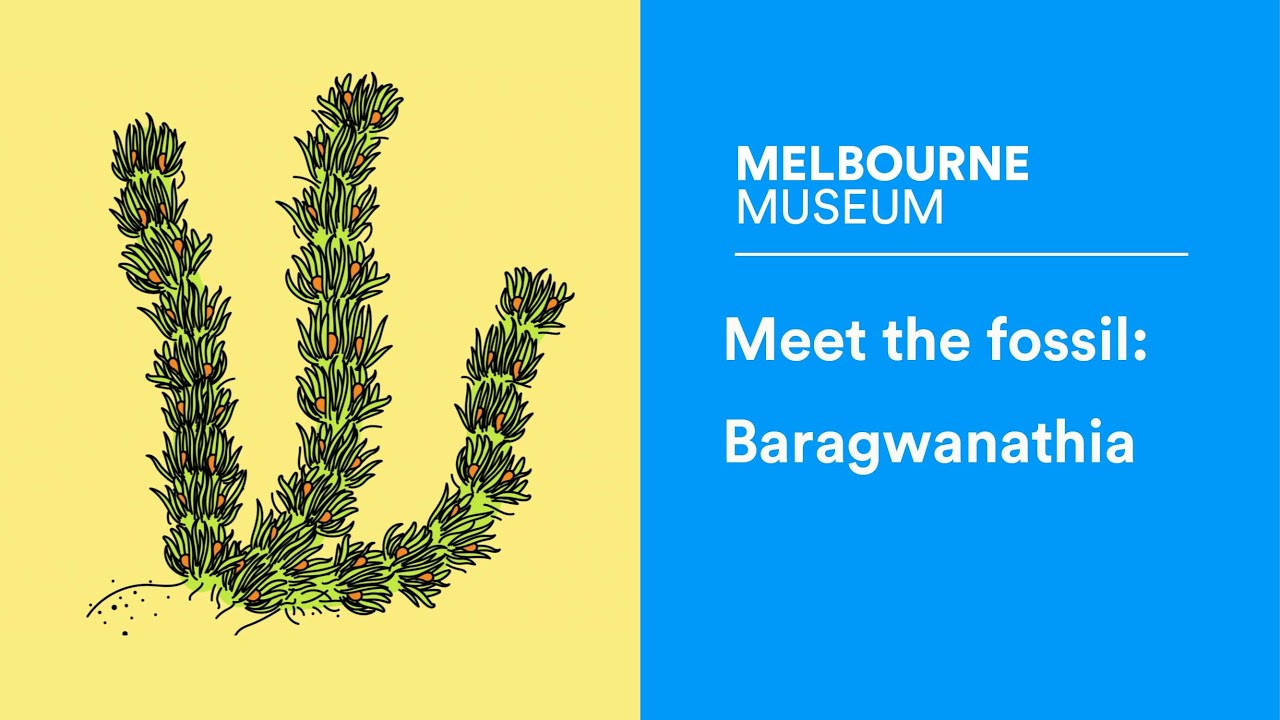
Over four mass extinctions and hundreds of million of years later, the Baragwanaithia became extinct and the region’s mountains were weathered down to their base. The ancient rocks beneath had been folded under prevailing heat and pressure. And like the balding head of an old man, the receding topography exposed the skeletal form beneath. This happened long before animals ruled the Earth but it set up the foundation for diversity.
Yet it was ‘wildlife-Earth’ that came after that nurtured the formation of orchids. So for millions of years hence, ecosystemsHow ecosystems function An ecosystem is a community of lifeforms that interact in such an optimal way that how ecosystems function best, is when all components (including humans and other animals) can persist and live alongside each other for the longest time possible. Ecosystems are fuelled by the energy created by plants (primary producers) that convert the Sun's heat energy More must have remained incredibly stable.
An incredibly stable co-history of evolution
There are species of orchid that are shared between New Zealand and Australia. There’s no way the seeds of these tiny flowers made it across the Tasman Sea. Which means their ancestors emerged before the continents slipped away from one 55 million years ago.
It was by teeth and claw that orchids, the impossible flowers, began their quiet and beguiling march when the Australasian supercontinent was still joined. It’s remarkable that some of the myriad forms we see today are the same as all that time ago.
By the time the first humans arrived in Australian just 65,000 years ago, orchids were living in a place dominated by volcanoes. In between roamed an abundance of megafaunaThe largest animals that represent the top of the trophic pyramid. These are the final building blocks in ecosystem structures for maximum entropy production. Megafauna can be measured at any spatial scale. The largest animal that ever lived on Earth is the Blue Whale. In a grassland, spiders could be considered megafauna The term is generally reserved for animals larger More like Diprotodon to tiny marsupial grazers, their activity synchronised to counteract the powerful destructive properties of plants. As recently as 200 years ago, the landscape was still an unimaginable menagery of abundant wildlife. This is what turned Victoria into ‘one of the richest areas in the world for its diversity of temperate and terrestrial orchids’ (Gary Backhouse, Guide to Native Orchids of Victoria).
Impossible flowers that mimic, beguile and swindle
Most of Victoria’s orchids are barely noticeable. Try finding them! You’ll spend an hour searching before discovering one, only to notice a hundred nearby. They hide in plain sight. Most are tiny, some don’t even produce leaves.
Where most plants invade open space, orchids pick their moment. They shape the tiny ecosystem around them. A miniscule amount of energy (nutrient) passing briefly through bare sand is enough to fuel their trickery. The more curious species flower in late winter and early spring. Their foul smelling odour attracts fungus gnats for pollination. Others pretend to look and smell like female wasps. This encourages vigorous fornication, where male wasps copulate with the plant’s own sexual organs to spread pollen. Some, like the Greater Duck Orchid, spring a trap and hold the unsuspecting insect against the pollen sack in a vice-like grip, even to the death.
Yet orchids would soon collapse under the weight of their success if allowed to pursue this chicanery unrestrained. They would pollute the tiny patches in which they live. To breed they bend the will of animals to their needs – they mimic, beguile and swindle. Which perhaps makes them more animal-like than most flowers (with the possible exception of the carnivorous sundews). Yet, they remain at the mercy of wildlife, locked into a 400 million-year-old debt of gratitude. It is how these pin-pricks of colour still exist in their own eternal desert.
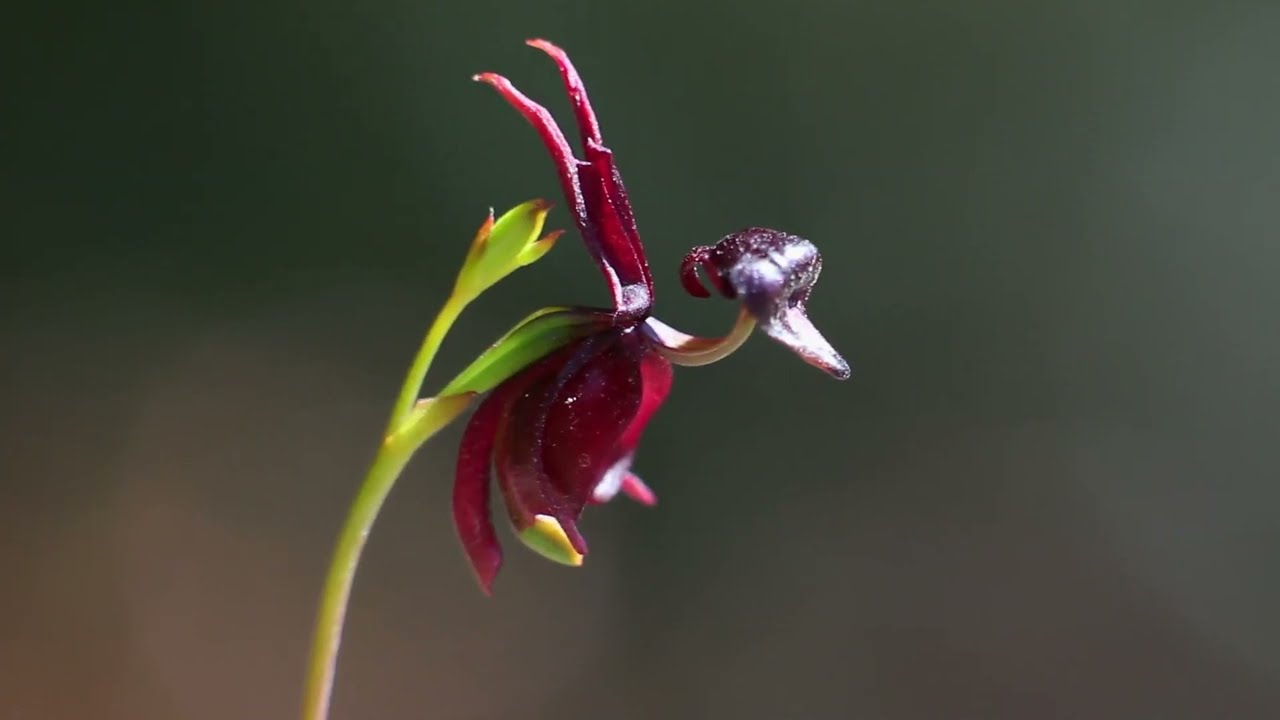
Because every year, orchids, the impossible flowers, are once again made possible by animals. They pay the debt for their existence to snails, slugs, thrips, earwigs and millipedes that consume their foliage. The bloom, having done its job, retreats beneath the soil awaiting another year – maybe more – to bloom.
Some have been seen only once in a lifetime.
Author’s footnote
One of the curious things about seeing orchids is that you’re observing a microcosm of the planet’s history. You’re seeing the outcomes of over 60 million years of ecosystem stabilisation. It’s remarkable these plants are still abundant in tiny protected patches of our neighbourhood. You’re also seeing the vestiges of processes that collapsed our whole world and the interminable relationship plants have had to endure, alongside animals, to enable these tiny kingdoms (some no more than a few square centimetres) to last for millions of years. That is what is so extraordinary and impossible. That flowers separated by 55 million years and 2,000 kilometres of open ocean remain virtually identical. It gives me hope that even under extreme duress, the most fragile and impossible species can survive, when animal life is simply allowed to thrive alongside.


It’s orchid time of year and what better way to begin with seeing the beautiful, early flowering Blue China or Blue Fairy orchid, Cyanicula caerulea. These widespread but uncommon flowers are endemic to Victoria, one of over 445 species that makes our state the top place in the world for terrestrial orchids.
