
It always amazes me how you can visit the exact same site a week apart and see completely different animals. I wrote about this in late 2023 in an article called ‘why nature makes patterns‘. Minor changes in the way a few overlapping conditions fluctuate, triggers animals to behave differently. Each species has a small window in which it might be abundant (or behave to appear abundant). Last week we saw pipefish, oxynoe bubblesnails and lots of schooling fish. Today we saw two species of sapsuckers we hadn’t seen for a while but none of the above.
Here are three species of sapsuckers we saw today.
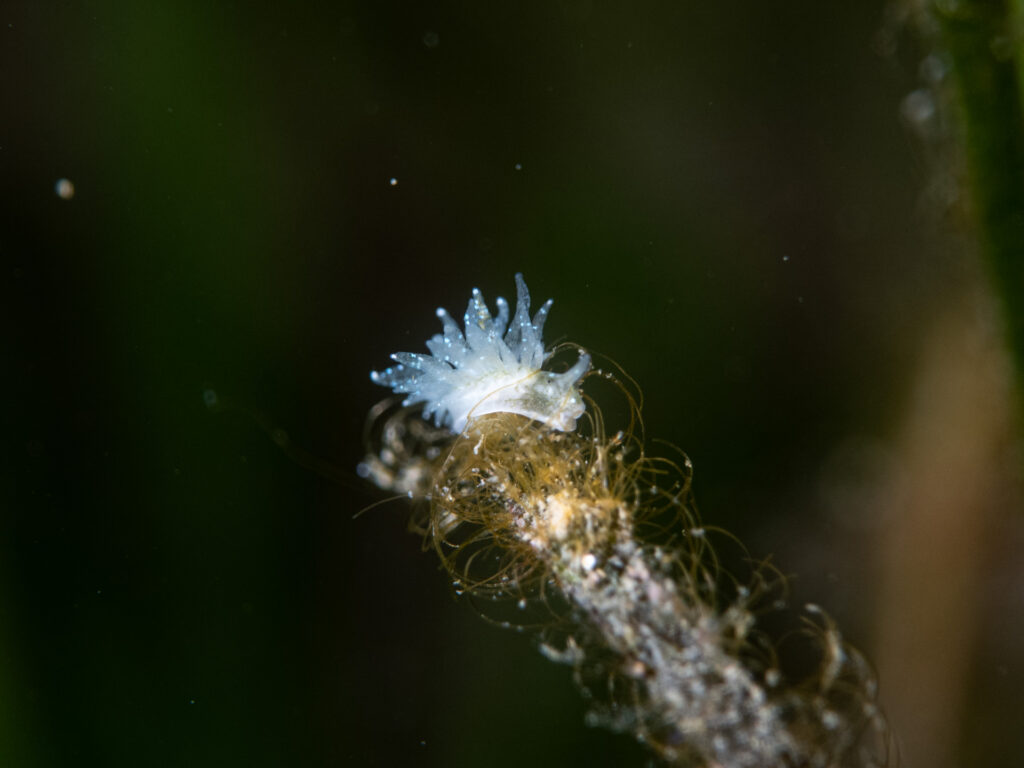
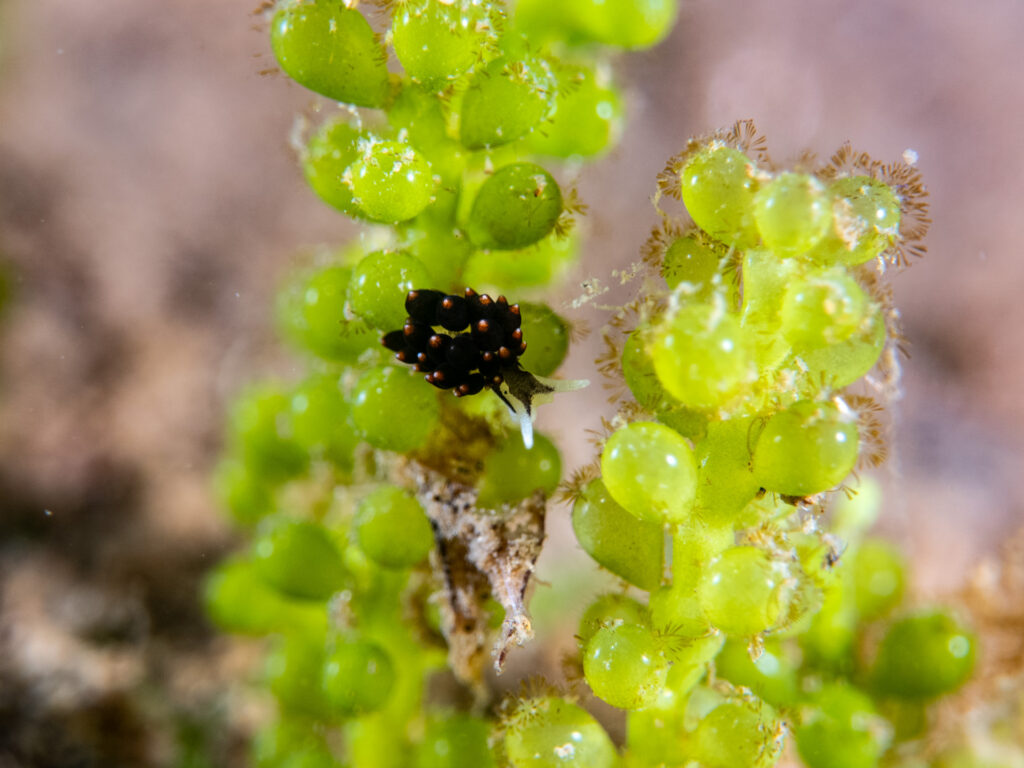
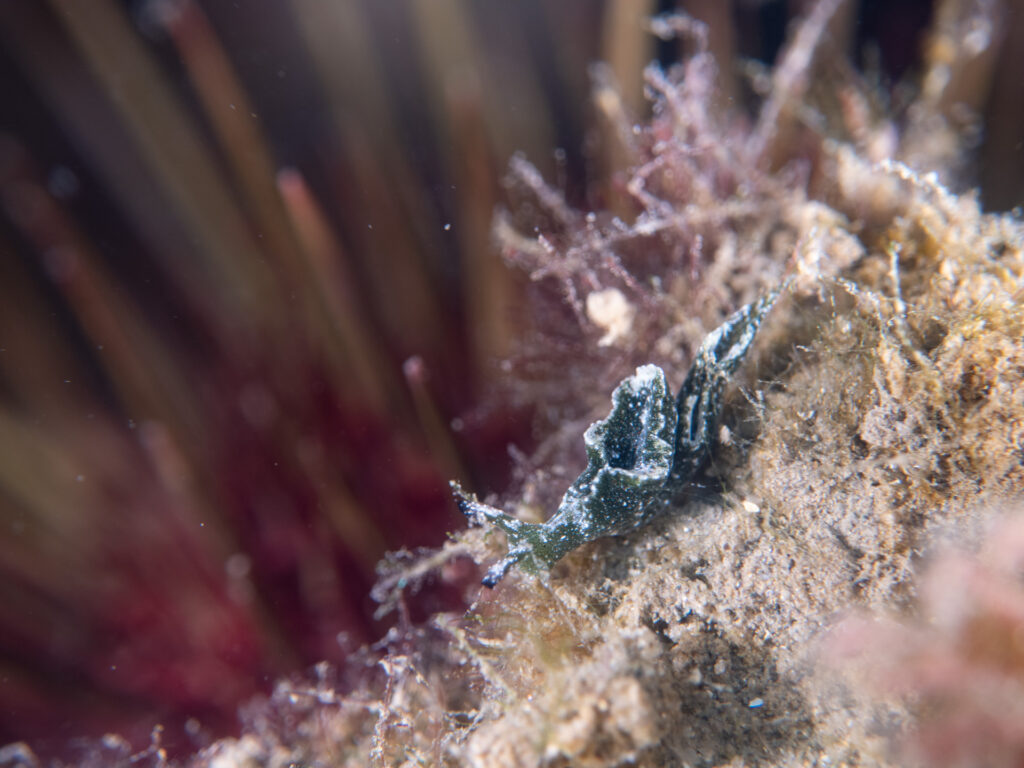
Abundant Coral Reef
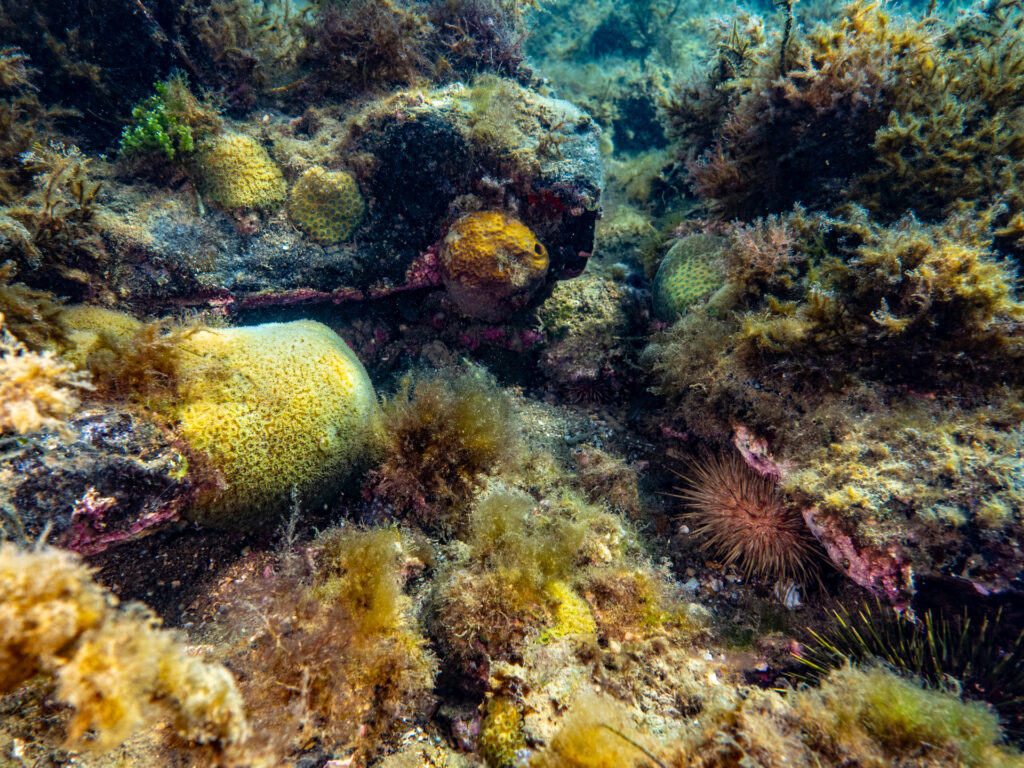
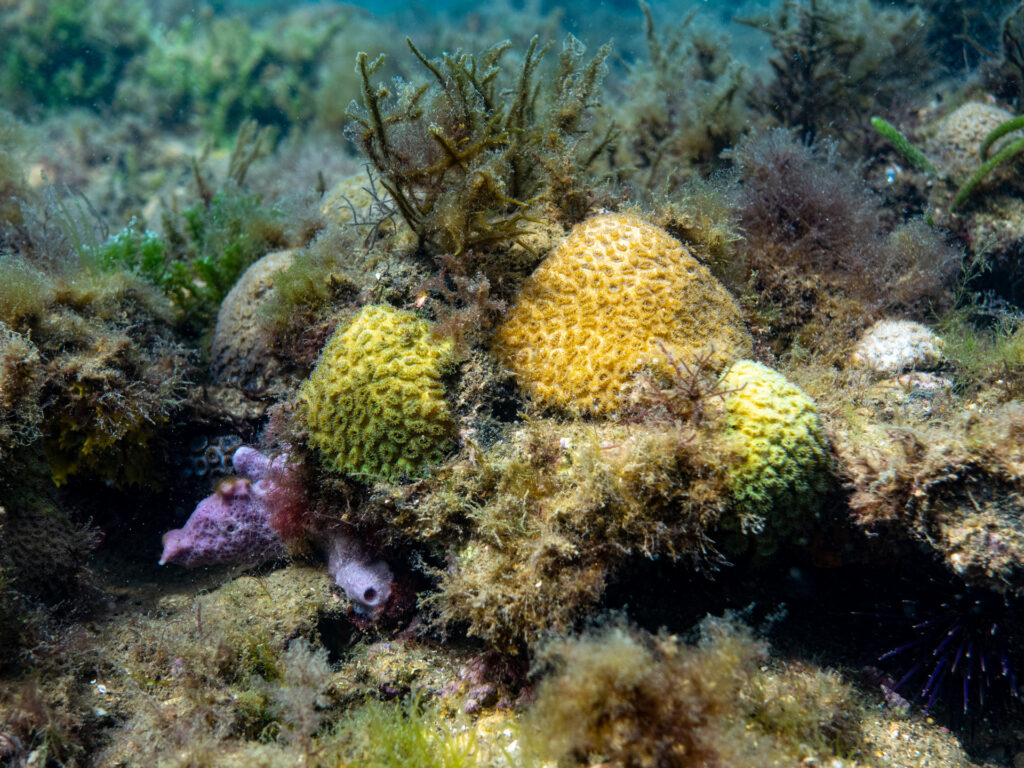
This site is fast becoming one of faves at present. One reason is because coral is so abundant here. In places, you can see urchins, sponges, caulerpa, sargassum and coral, all occupying a tiny space. The inter-relationships of these drive the area to function. We’re finding a lot of ‘critters’ which is testament to that diversity.
In 1971, biologist Hope Black did the first ever surveys of Port Phillip Bay. At that time, she reported that ‘reefs [of] the coral Plesiastrea occurs in some cases almost to the exclusion of other species.’ This site appears to be one of those places. Or at least a remnant of it. Anchoring of boats is common in this area. It’s also increasingly exposed to freshwater and nutrientsEnergy and nutrients are the same thing. Plants capture energy from the Sun and store it in chemicals, via the process of photosynthesis. The excess greenery and waste that plants create, contain chemicals that animals can eat, in order to build their own bodies and reproduce. When a chemical is used this way, we call it a nutrient. As we More from storm water drains. This part of Beaumaris Bay, I would say, is more diverse, fragile and just as important as Rickett’s Point Marine Park. It has similarities to the fertile sand coral reefs in the tropics … which are also vastly under-represented for protection.
If you don’t know what it looks like, head out about 150m directly in the direction of the jetty at the scout hut.
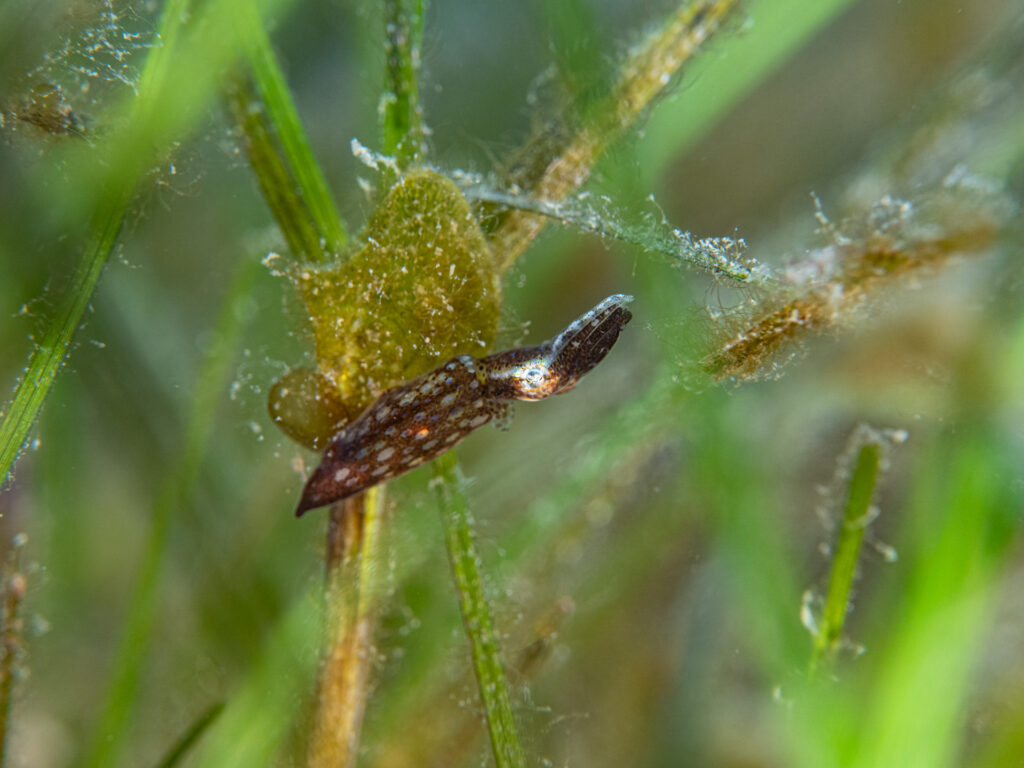
Pygmy Squid in Port Phillip Bay
One of the delights was seeing Pygmy Squid. This is the smallest species of squid in the world. To spot them you have to keep your eyes peeled inside the seagrass or sargassum. They hide underneath the vegetation but they aren’t particularly shy. I spotted this one before it moved away and managed to photograph it without disturbing, so you can clearly see the flattened out tentacles and the siphon.
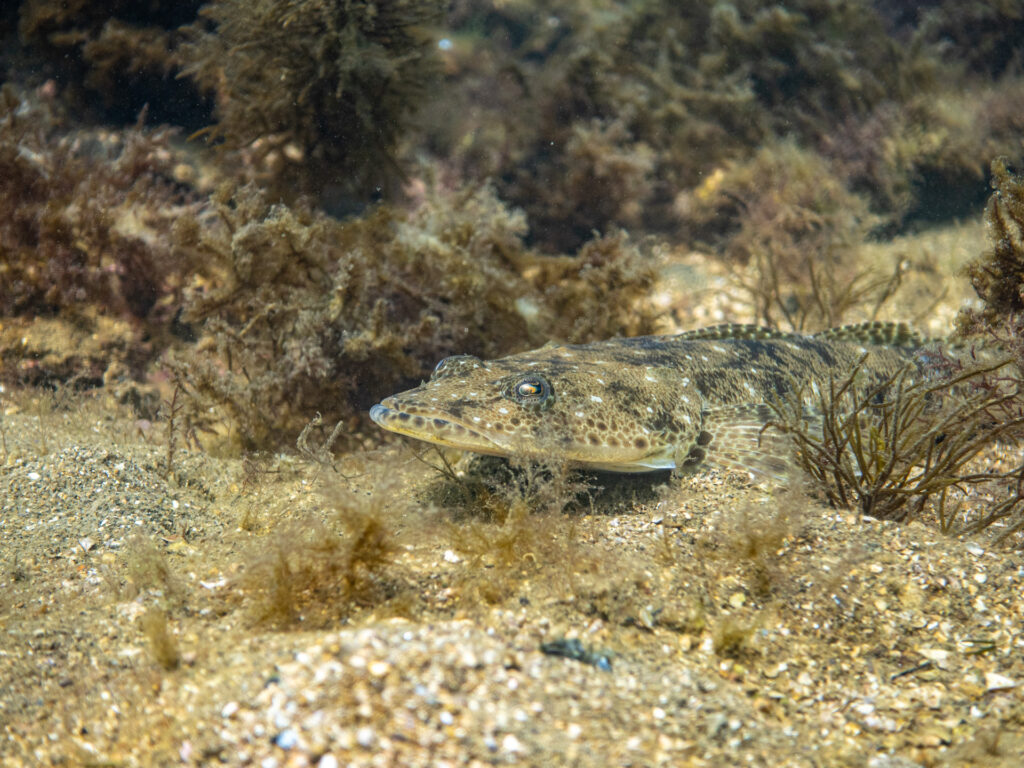
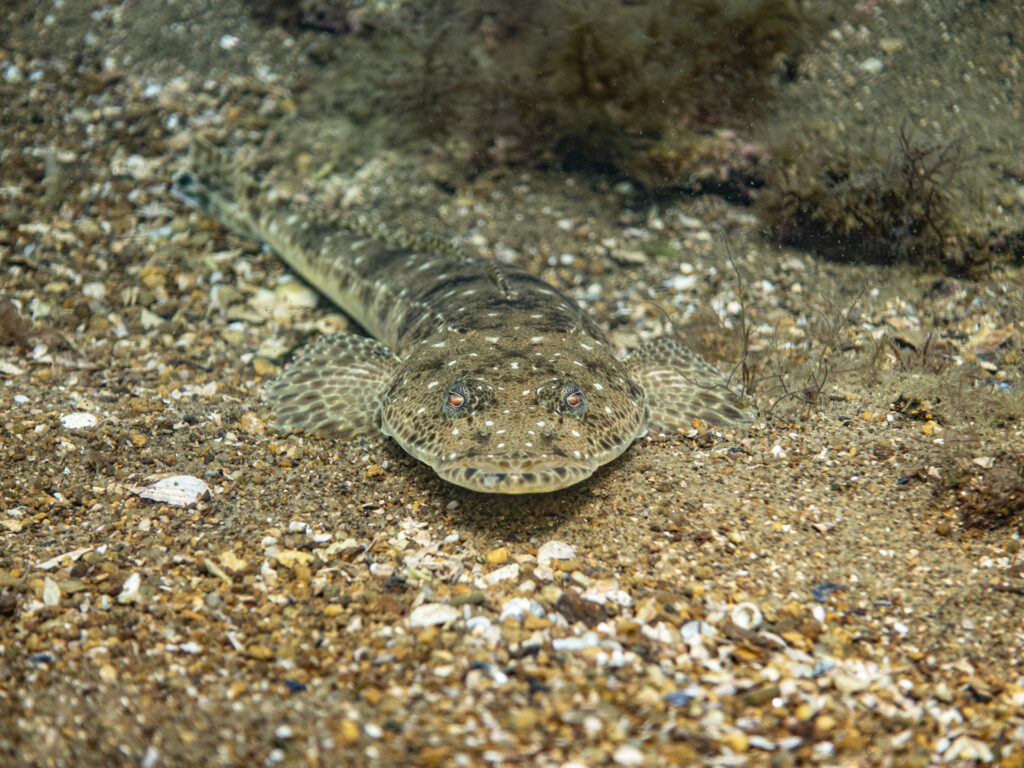
Sand flathead
The other nice surprise was a sand flathead. They are usually too shy to photograph as they are targeted by spearos. Two spearos were getting in as we emerged from the water, so I hope it survived. Flathead are becoming quite rare and there are now bans on recreationally fishing them in other states. Victoria doesn’t have such rules, even though they are just as threatened.
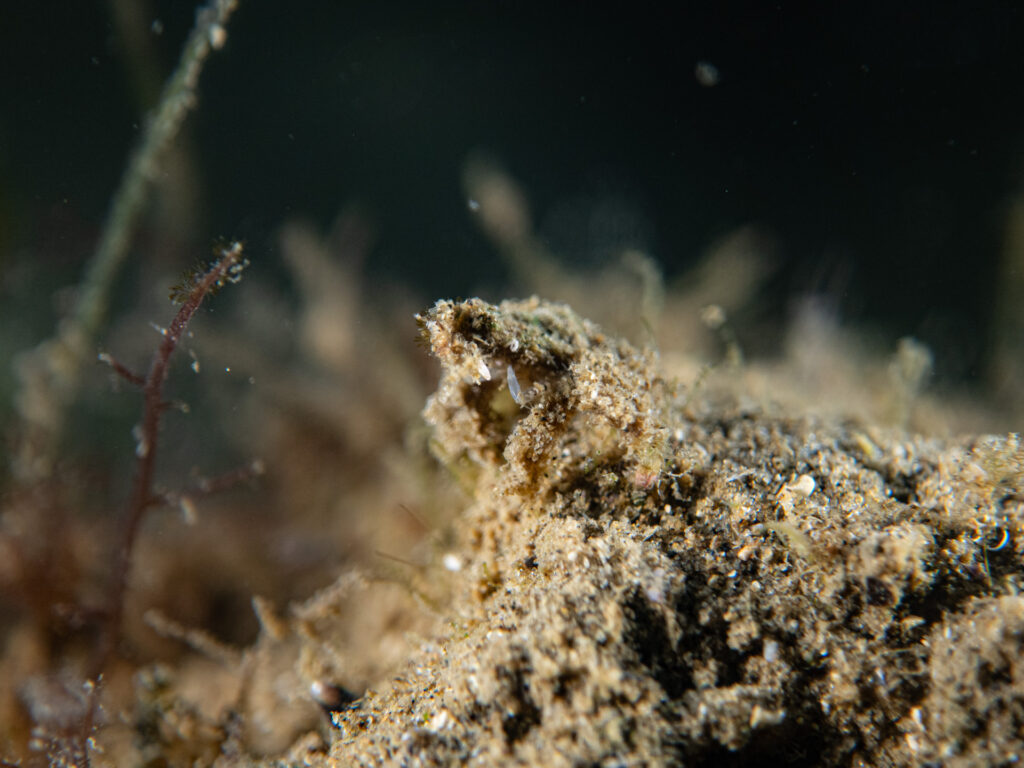
Decorator Crab
One final observation was this tiny decorator crab. I wouldn’t have seen it if I hadn’t been concentrating on refinding one of the sea slugs. He moved and revealed his incredible camouflage. This was only about half a centimetre across and covered in grains of sand. It seemed quite content with its home-made cover and carried on feeding out in the open.
It’s not the best photo but they are terribly hard to make sense of. You can just see a claw sticking out from inside his sandy coat and the white dot that’s its eye.
Once again, it goes to show, that you can just keep visiting these places over and over and never know what you will see next!
Happy swimming : )