
Theories about how your mind connects to nature and the universe are a relatively new path in physics. But similar complex systems theory pervades ecosystem science too. Here I connect some of the dots, to consider the implications this might have for the basis of our consciousness and connection to all other people and animals on Earth.
Consciousness, complexity and stability
Let’s begin with the idea that thoughts and actions are influenced by the world around you. In a steady stable ecosystem, animals (including humans) have developed the culture to ‘know’ (without learning) how to act. Those actions are made consciously and contribute to the longevity of a community or even a whole species.
If Earth’s biosphere changes due to a meteor strike, the system alters. For example, a mass extinction of dinosaurs, leading to the age of mammals. Unforeseen outside influences including extreme weather change the way ecosystems respond too. Earthquakes, volcanoes and bush fires are nature’s reactions to perturbations in the environment. A reset if you like. But for the most part, our planet is stable because of feedback loops that maintain normality.
The Earth onion
You might think of these systems like an onion. There are layers upon layer of concentric levels of being. Each contains it’s own complex system and is held in place, and interacts with, the systems that surround. Culture, language, bodies, minds, consciousness, chemistry, weather, energy … each is acted upon and is held in place by something equally profound. Each layer has setted into a pattern that was the likeliest to survive, and in doing so, created those feedback loops that stop the system from falling apart all of the time.
Your body and mind as an ecosystem
Consider that your body is an ecosystem in its own right, sitting inside an ecosystem made up of plants and animals. Your body reacts in response to the outside variables without succumbing to extreme changes, wherever possible. But inside your body is another system.
It’s been recently discovered that DNA is not the key driver for protein production. In fact, there are proteins freely recombining a different way all of the time, to enable actions and reactions. If you’re reading this on a screen, the light entering your eye, has caused instant protein recombination. So too has every sensory impact that occurred in your body in the last few seconds. But part of being in a complex system is being able to react when needed. We know that we are adaptable and can make conscious decisions, relative to the urban or natural environment we live in. This is how our ancestors shaped the planet we live on today.
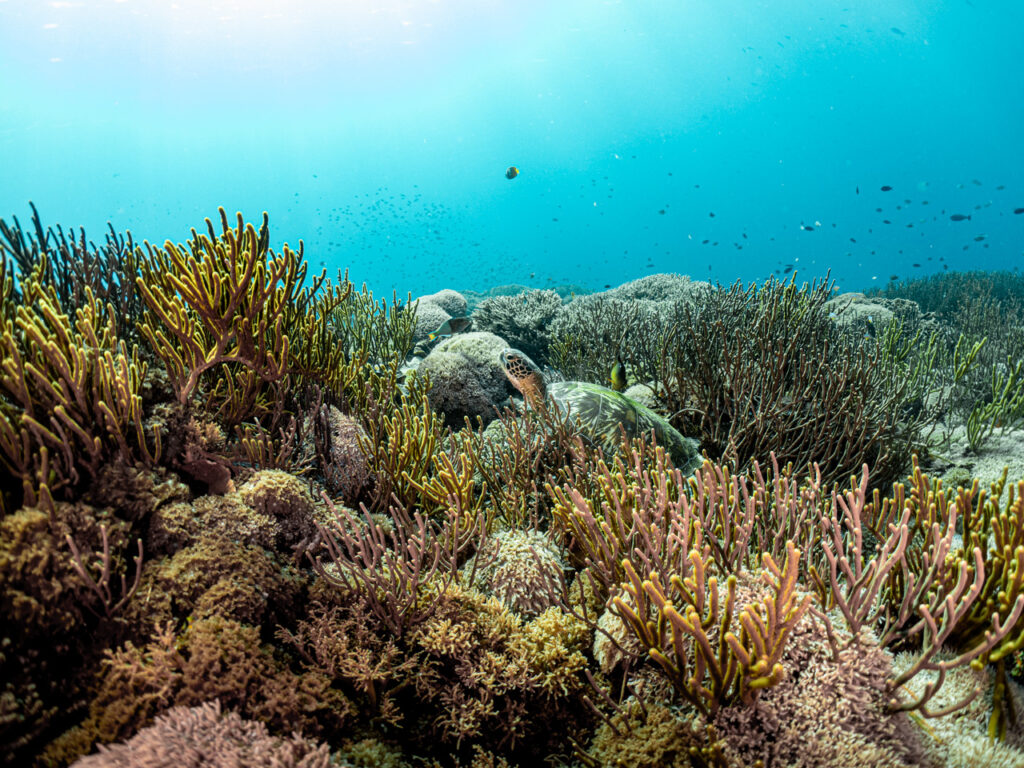
Complex animals like us, can only do this (and survive) because our internal systems also help maintain the body’s molecular stability, buffering us against our own misadventure. It protects us from creating havoc with our bodies when we make poor decisions, or we’re subjected to unfamiliar or dangerous environmental situations outside ourselves.
But what if that consciousness extends further, into the whole of space time. And what if, it is shared with others?
Consciousness and quantum energy
This is what scientists are now investigating. They are exploring whether our very consciousness acts on a quantum level, connected to the quantum vacuum.
The quantum vacuum is energy that exists in a vacuum at absolute zero. That’s to say, when atoms themselves stop vibrating, the Universe isn’t ‘dead’. Fluctuating fields of quantum matter still shift from one state to another. What they are suggesting is that there is another outside, supporting structure beyond DNA, proteins and atoms. Further, this may be a factor in how our very consciousness is formed, how we think and connect to nature and each other.
How our brains might react to quantum energy
Lisa Lock’s work suggests that the quantum field resonates with glutamate, a neurotransmitter in the brain. There are what they call ‘micro-columns’ of about 100 neurons that vibrate in unison. But because these columns are separated, it suppresses chaotic function in the (as they say) ‘warm, noisy brain’ while enabling us to react where needed. If they’re correct, it’s this quantum-level effect that regulates neural firing.
This isn’t the most curious part. When one observes quantum particles, the very act of observing them, changes them into different particles. Should theories of how our minds and quantum energy are connected, prove correct, it means our minds’ consciousness may be wired into the fabric of space time and alters the form such matter takes.
That’s to say, when we observe the world around, the make-up of the particles change, on a quantum level. This triggers our brain’s behaviour and creates an ‘experience’. So rather than believing we are impacted by the environment, it may equally be the case that by ‘being’ we are part of a nested series of complex systems, of which the Universe is directly acting upon us.
This isn’t so different to how our indigenous cultures reached a point of unanimity with ecosystems over tens of thousands of years. Which is why it seems to make sense.
What if you mind exists in multiple places at once?
The other fascinating consequence surrounds the theory of non-locality in quantum physics. Quantum non-locality has been proven. It means that two entangled quantum particles continue to behave in unison, regardless of how far apart they are. Quantum computing is being developed on this principle, that separated particles can communicate more or less instantly as well as exist in more than one state at once, thereby enabling faster computing.
Which begs the question. If we can create computers based on these physics, why wouldn’t we expect this to have evolved to work the same way in nature?
We already know that migratory birds use quantum entangled particles to navigate across the planet’s surface. It won’t be surprising to learn that quantum mechanisms enable other animals’ behavioural needs and decision-making.

These theories challenge the very notion of self. Your mind and consciousness may not be singular and separated from the Universe. In fact, any one of the innumerable quantum particles in your brain may be shared with innumerable others if you share particles that have ever interacted … despite how far apart you now live. One could consider this to be an explanation for the unified culture of people who have lived for centuries in the same place. They wouldn’t just share particles with each other but also with the minds of other conscious beings.
What if, by simply thinking about something, you may be altering the way another’s mind thinks? Concepts of empathy and inter-species communication may be based on this.
Our relationship to each other and nature
If these theories prove correct, it could rewrite our understanding of how we interact with others, both our species and other animals on Earth. Our minds may be even more strangely and strongly connected to the Earth and even beyond, in ways science has never imagined before.
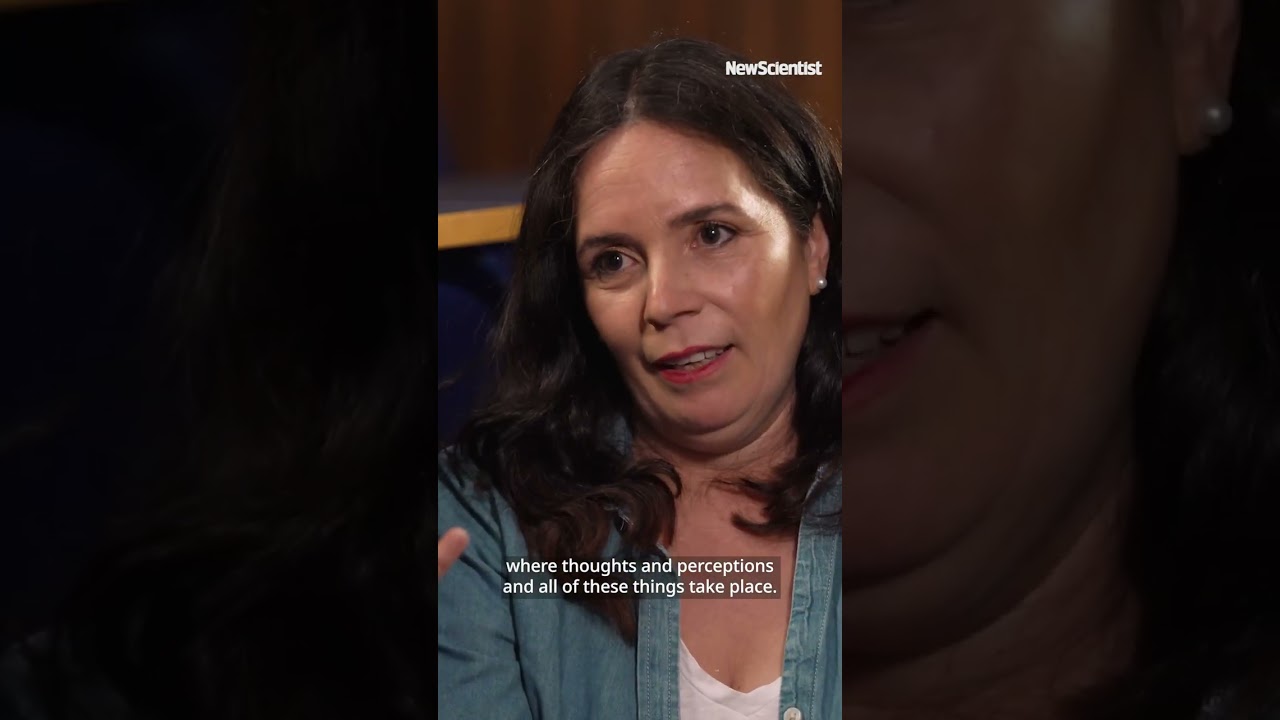
Here is Ivette Fuentes, Professor of Quantum Mechanics at Southampton University, talking about how our experience and space time may be connected. Fuentes says ‘we all have experience and we think other people do which I think is a fair assumption to make. Somehow in our brains I think is an interface between matter and whatever we call experience’.
It would also validate some of the ideas I explore in How to Survive the Next 100 Years: Lessons from Nature, suggesting we are part of a powerful system, not the creators (or destroyers) of it. That our species’ current predicament is part of a complex system process that is natural.
Yet if we have an ability to empathise and group-think, it also means we aren’t as alone as we believe. We know we can make conscious decisions to change things for the better. That we may be universally connected to each other, enabling shared understanding, purpose and direction. Combine this with ecosystem science as it extends to culture, language and emotion; the rapidity by which animals can collectively restore ecosystem function; and we may be on the brink of discovering renewed purpose in our role on Earth.