
I recently saw an internet video explaining how understanding ecological ‘edge effects’ can change your life. The suggestion was that living in the edge effect can create opportunity. That’s partly true but it also depends on scale. So, what’s the truth behind edge effects in ecology and life?
How edge effects work
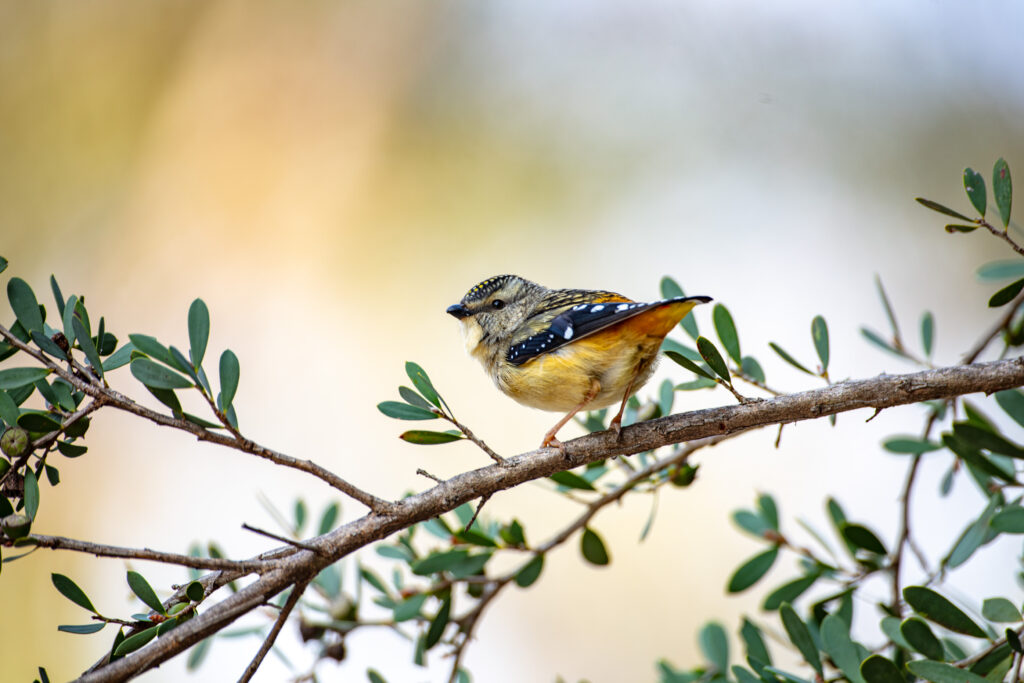
If you regularly read my posts, you’ll know I’m fascinated with how ecology and systems often reverse behaviour when implemented at scale. When you learn ecology as a student, you are taught how parts of a system work. Edge effects are one such fundament of ecology. The effect happens when two habitatsWhat is habitat for animals and people? Habitat, hence the word "habitable" describes the natural surroundings in which any animal (or human) lives, that houses basic needs, such as food and shelter. Vegetation, for example, is habitat for animals. On its own, habitat is not necessarily stable or sustainable, which is why it differs from an ecosystem. Habitat in disrepair More border each other. For instance, the margins between grassland and forest tend to be more species diverse than the grassland or forest themselves. Inside a primary forest, there are fewer animals. The system has reached a steady stable state – ecologists call this a ‘climax state’. There is little free energyThe energy of a system that is emitted as waste and is not part of ecosystem processes. There is always some free surplus energy as this creates the basis for evolution where new species exploit gaps in the ecosystem where free energy becomes available. Surplus energy can occur as a result of disruption or disturbance. When free surplus energy reaches More in climax ecosystemsHow ecosystems function An ecosystem is a community of lifeforms that interact in such an optimal way that how ecosystems function best, is when all components (including humans and other animals) can persist and live alongside each other for the longest time possible. Ecosystems are fuelled by the energy created by plants (primary producers) that convert the Sun's heat energy More meaning only the optimum number of creatures persist. These are the most likely to surviveDarwin’s theory how species are formed, where those that stand in closest competition with those undergoing beneficial modification and improvement, will go extinct faster. Natural selection is by survival of the likeliest, not survival of the fittest. The fittest are only likely to survive because they happen to be most suited to the environment into which they are born. The More by maintaining the status quo.
The breakdown of ecological processes at the edges creates opportunity for animals to restructure the ecosystem due to a release of surplus energy. This is disruptionThe result of an action that creates a sudden change in the stability of an ecosystem or process. This tends to create a gap where there is free surplus energy and organisms will move in to fill the space. Disruption might be a tree fall, or the application of pesticide to farmland. Disruption is important to maintain dynamics in ecosystems More of a system and it’s similar to how tech billionaires are constantly trying to disrupt our lives to create their own edge effects and capitalise on the release of money.
The internet video implies this is how ecosystems can flourish but based on the example I just gave, you may have already figured out how this isn’t the whole story.
The advantage of edge effects reverses at scale
There is a principle in science called Simpson’s paradox. It says that a trend can reverse when groups are combined. In this case, as you add in more edge effects, you reach a point where the system flips. Edge effects will increase diversity, however, this cannot be sustainable at scale. Because, for example, if you fragment forests continually, that energyEnergy and nutrients are the same thing. Plants capture energy from the Sun and store it in chemicals, via the process of photosynthesis. The excess greenery and waste that plants create, contain chemicals that animals can eat, in order to build their own bodies and reproduce. When a chemical is used this way, we call it a nutrient. As we More release will eventually overwhelm the system and cause collapse. The same goes for technology advancement. If it’s done to brutalise existing socio-ecological systems and break them down for capital gain it will cause unrest and societal collapse.
In a recent article, I touched on how systems require feedback loops to maintain resilience. That our own minds and culture are contained inside other systems that need to be adaptable while also remaining steadfast. Otherwise, how would we know how to act wisely? When the ecosystem around us begins to collapse, outcomes become chaotic and we don’t know what to do, or where to go, to find food, shelter and water.
Too much edge effect creates collapse
The real truth is that edge effects are a necessary part of keeping systems adaptable but their components also die off quicker. For many species they represent an ecological ‘sink’, meaning that creatures there die faster than they breed. Culture also diversifies, as animals adopt increasingly radical behaviour. All of this means that if there is a shift in the rest of the system e.g. the stable forest part, there may be creatures available, that have learnt new ways to behave. They may be able to respond fittingly to the ‘new normal’ and take over inside the forest, where the previous stable elements of an ecosystem left off.
So, edge effects are necessary but not a panacea. They don’t offer a way to survive. They are only part of a system of wildlife in the balance.
Edge effects can also be cultural
The internet video explained that if you’re a person who has lived in different places and experienced different cultures, your perspective may be broader and your mind more inspired to see the world differently. That that may give you the ability to make better decisions. This is true to an extent. Equally, we live in a highly fragmented and unstable socio-political system that is disintegrating under innumerable financial edge effects. We are like the animals that live on the edge. Humans are forming small groups and new cultures, that behave in radically different ways to the people we live among. We are part of a natural system that is all at once under collapse and rebuilding itself.
By contrast, cultures that are stable and have co-existed with nature for thousands of years, don’t need to make radical decisions about how to act in an unstable world. The people they live among act communally. Believing in the same priorities. They know how to behave through being.
The truth is that we do need different thinking and behaviour but only a tiny fraction of that radical thinking and behaviour is ever going to persist. Here’s the real mystery. We will never know which. So while we should foster innovation, this can only be at the margins. We can’t complain if someone else has an ideology different to ours but we also can’t act in ways that destroy the integrity of the environment that supports all these ideas.
Instead, we must to maintain balance with the more stable aspects of our society, nature and planet. Because it won’t be us, but nature that figures out which of us moves out of the edge effect and becomes part of the new climax state of our future planet.