
Introduction
What can we actually do about bird flu is a question I was recently asked. My response here is not necessarily going to be popular with everyone. For reasons I will go on to explain, the things we think we want are based in a philosophy out of sync with nature. Here I am going to try to introduce a different philosophy. One based on a truer understanding of the system you live in. It’s really a question about what society needs, not what we think we want. Do we want to accept these types of catastrophes as the new normal? Do we simply want our leaders to ‘do something’? When they feel just as disempowered as we do.
Or do we need to start thinking and acting differently on a community level by individually becoming a solution for what we all need? To really solve these problems means re-framing discussion and for reasons I’ll go on to explain, there is an important role you can play. In light of that, here are eight things we can actually do about bird flu.
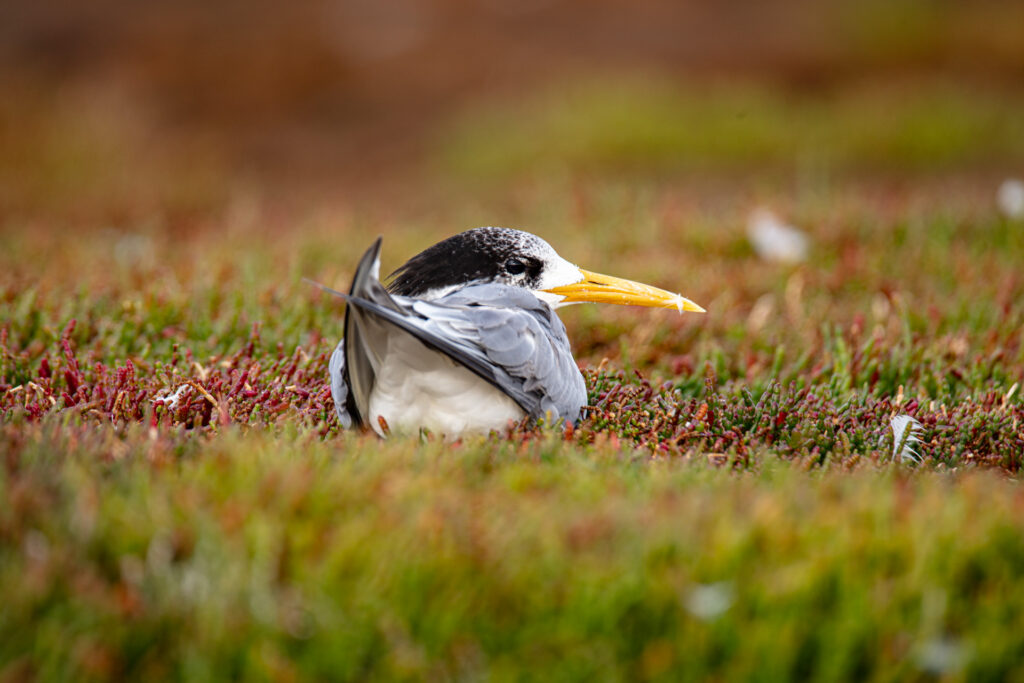
1. Change outcomes using nature-based solutions
University College of London professor Karl Friston describes how contemporary science makes decisions based on the few causal factors we understand. That’s called reductionism. In ecological science for instance, research scientists reduce systems to one or two variables to understand how they interact. By removing components and controlling for outcomes we can test simple hypotheses. However, complex systems run in the opposite way. Thousands of interconnected factors creating imperceptibly vast numbers of possibilities. The majority of these factors, and how they interact, are unknown. A broken system doesn’t operate better by removing components. To fix the system that supports bird flu, components have to be added to create more redundancy, to rebalance outcomes naturally.
In the same way as there is no single factor that causes a problem, there is no magic bullet solution. Vaccinating seabirds, for example, may be necessary in specific cases. But this is only widely considered a solution, because we’ve allowed things to get out of hand. Vaccinations won’t substantially change the overall outcome. For vaccination to be the answer, it must be based on the idea that if you vaccinate individual birds, it will alter the overall system that caused bird flu. That’s impossible. The pandemic will run its course whatever.
Koala conservationist Deborah Tabart OAM calls it ‘“closing the door after the horse has bolted”’. She adds ‘many of the wetlands that are necessary for migratory birds are under enormous threat like Koala habitat and I see no political statements … about how those landscapes can be better protected. It always, always is about band aids’.
We already know that nature-based solutions are the only way forward for our economies and cost of living crisis. If you care about your own community’s living environment, you need to learn more about how this is done.

2. Seek the right information to form a useful opinion for yourself
Since May 2025, the traffic to my website has dropped by 80%. It was growing by 6.5% a month on the two years leading up to that. Google launched its large language modelThe process, either mathematically or in the human brain, of creating an internal version of something that we can refer to, to better understand how it functions and our place within. Scientific modelling is where we take the best knowledge we have and build a version of what will happen, if we assume certain parameters. For example, we might model More. This has ripped the heart out of online discourse and replaced it with an extremely vanilla version of reality. Now, all you see and hear, is the information shouted loudest. If you’re at all familiar with my first book Wildlife in the Balance you’ll know that innovation and progress always begins with ideas at the periphery of what exists.
So, when I put the question ‘What can we actually do about bird flu?’ into Google, you don’t get any nature-based solutions. Instead, you get exactly what you expect:
‘To combat bird flu, authorities, farmers, and the public practice strict biosecurity, track wildlife movement, safely manage infected animal carcasses, vaccinate targeted vulnerable native bird species, and report sick or dead wildlife immediately.’
Yet reading social media comments threads, people are asking the intelligent questions. There is a ground swell of support for community-led nature-based initiatives. If you ignore the occasional nay-sayer, there is more wisdom in the comments than the posts. The problem is, these are not forums where people can feel safe or free to discuss further. If you put such questions into AI, the answers are immediately trivialised. If you put them to research scientists and government, as Deborah Tabart explains, you’ll get band-aid suggestions.
Which means we all have to work a bit harder to find the balanced information. It means ditching the socials and news. We must dig deeper into the subject of how ecosystemsHow ecosystems function An ecosystem is a community of lifeforms that interact in such an optimal way that how ecosystems function best, is when all components (including humans and other animals) can persist and live alongside each other for the longest time possible. Ecosystems are fuelled by the energy created by plants (primary producers) that convert the Sun's heat energy More work and the new opportunities that offers.
3. Ask, how did it come to this and what do we do next?
If we are at the point where vaccinating wild bird populations against a disease has become our only hope, why aren’t we asking ‘how did it ever come to this?’ This is not a question you will hear on the news and it’s rarely said by research scientists.
Bird populations should be able to naturally resist some disease and recover fast. But where they lack the resilienceReferring to an ecosystem’s ability to maintain a steady stable-state. The need to build resilience is entirely anthropocentric and symptomatic of ecosystems that are damaged or declining, leading to loss of ecosystem services on which humans depend. More to do so, it is because of our failings in the past. The real question is, what do we do next?
This is where we have a problem with the ideology some conservationists have built for themselves. They can become the obstacle to wider society’s ability to act on its own initiative.
Charles Clover, author of Rewilding the Sea echoes Isabella Tree in Wilding by saying:
‘… science advances one funeral at a time as the deaths of fierce advocates of past orthodoxy allow new ideas to gain ground.’
It’s relatively simple for large organisations to get money for ‘magic bullet’ technical solutions that offer the illusion of a long-term solution. It is also inevitable that money will flow to those desperate measures when they are needed. Meanwhile, that makes it harder to get money for community co-designed, co-led and co-managed outcomes.
Once again, there is little safe space being created for proper community-level discourse and community-led action. It’s a fact that most scientists do not understand the critical role communities play in ecosystems management. This is a demonstrable fact, because if they did, we would already have widespread public knowledge being used to inform decision-making.
Which means one thing you can do is to start creating a safe space so your community can begin to at least discuss their own initiatives to protect the places you live.
4. Change your own belief system
We have fallen into the habit of assuming that other people have the answers. Often demanding ‘experts’ fix our problems while (ironically) begging to have more say in our own future. That makes us part of the problem. To change the resilience of our environment and withstand environmental shocks like bird flu, the way to begin, is by changing our own beliefs. It’s challenging and uncomfortable at first. But it’s necessary to unlock those possibilities … and it works.
We are going to have to disregard notions that humans are bad; that the world is better without us; that people are stupid; that ‘they’ should be doing something; or that other people’s ideologies are wrong and only we are right. This is toxic rhetoric. These are the same words I hear used by experts to stymie the community discourse we really need.
We must accept that no-one individually (or any individual group of experts) has control whatsoever over what happens next. That opinions are not a solution. That we live in a complex system where unforeseen combinations of doing and knowing create the outcome we are looking for. This knowing appears after sharing stories and having conversations across whole communities. It must be informed by science but cannot be led by it.
Our role as conservationists, if anything right now, is to help communities bring their own knowing to the fore. This is the basis to finding common ground. To inspire people to tell different stories to each other. One where it’s possible for people and nature to thrive and to restore a more productive, less costly and altogether greater society.
That is going to come from outside the conservationWhy is animal conservation important? Animal conservation is important, because animals are the only mechanism to create biodiversity, which is the mechanism that creates a habitable planet for humans. Without animals, the energy from today’s plants (algae, trees, flowers etc) will eventually reach the atmosphere and ocean, much of it as carbon. The quantity of this plant-based waste is so More community. In short, it’s the role you have always known you need.
5. Discover why birds are actually important
This is a question we need everyone else to be asking of themselves, to figure out the answer … individually.
Why does it even matter that birds exist?
The answer is not in putting a value on the birds. Birds are already being put up as economically important because of birdwatching. But this is the antithesis of what we need. When the value of a bird is reduced to a dollar value based on lunches and fuel spent watching them, it’s devoid of any connection to natural systems. Similarly, if we calculate the cost to poultry farming, this can end up being pitted against wild birds. Done this way, wild birds can quickly be blamed as the cause, when in actual fact, they are just another symptom of a failed system.
There is nothing inherently wrong with putting a value on nature. You just can’t use a dollar value on a bird as this only describes a tiny fraction of its contribution to an overall human-animal ecosystem. Such over-simplified evaluations make things worse. They sew division and create arguments between different parts of our community. For instance, the community is not going to accept spending millions of dollars restoring bird populations after bird flu just because a few people like to watch birds as a hobby.
6. Make birds visible to the marketplace
Monetary values are irrelevant as they don’t touch people’s lives equally.
Economically – and more importantly – emotionally (which is the majority of the value that drives our economic productivityThe power of an ecosystem to process energy. The most productive ecosystems have reached a steady stable-state with maximum entropy production. That’s to say, the number of species has reached an optimum and the functions they fulfil, have translated free surplus energy into nutrients that is either stored inside plants and animals, or is entrained within the biological cycles that More), we need birds to be visible to our economy.
Birds are relevant to every person’s daily livelihoods and lifestyles. While bird flu runs its course, we must tell a new story, one that inspires people to draw their own connection between the way the birds make them feel and the value they give to their community, both socially and ecologically. It’s not just how we see birds, it’s also the critical role they play in maintaining the functionality of the environment we work and play inside every day. The way we feel in a forest or wetland is also created by birds.
Without birds, our whole society collapses, along with everything we hold dear.
Provide a safe space for people to have conversations and they will quickly work these values out for themselves. They will discuss this with each other. This way, their story will spread rapidly and soon become transformational. It’s not that hard to do but it requires letting go of any notion of control and allowing everyone to have a say in the health of their own environment.
If you’re the sort of person who likes sharing knowledge, and has empathy with others in your community, your role is to allow others to foster their own ideas through mutual story-telling.
7. Tell this new story to everyone
The truth is, birds are important because of all the services they provide. There are tens of thousands of pathways to these values flowing into all of society. Birdwatcher or not, this touches all of us. There isn’t a thing we do each day, that can’t be traced back to a healthy ecosystem and birds are a key driver for that.
Conservationists have hardly ever measured this. Mostly because, to do so, means letting go of control. It means listening to people who have alternative political opinions, while also accepting humans as a key part of a functioning ecosystem. It means allowing people who are not conservationists to have some ‘ownership’ over the future of birds.
Tell this story and I can guarantee you will influence more people and create more positive change than you ever could by commenting on social media or venting on politicians.
8. Turn off the news and stop reading about disaster
I’ve turned off every notification about bird flu. Most are designed to make me feel stressed. This causes nervous system shutdown and helps no-one, or the birds.
I don’t need to be told how serious bird flu is. Being more anxious about it will make no difference to the outcome. Instead, I want to spend my time spreading stories about how important those birds are and what we can do to save the places we share with them. This is why I write this blog!
So, rather than sit and dwell in despair, use the time to contemplate new ideas. You’ll want to blame someone, it’s only natural. You will start to expect action to be taken. Anger may take over as you want people who are as equally powerless as you, to do something. Even though you don’t really know what.
It’s a complex system and there is no single cause. But the solution lies with you.
That lack of control is the key to working out what to do next. Accept it. Embrace it.
Because nature can quickly fix our problems, if we allow it to. Once you accept that, you will start to become less biased in your ideology. Remarkably, the information you need to make a difference, will start appearing to you. You will become more positive and motivated with ideas to nurture, support, share and enable restoration of ecosystems by other animals including our own communities. You’ll feel better.
Then you might find yourself having more constructive conversations with people in your own community who you didn’t think cared before. By giving them a safe space to be heard, you will begin to discover common ground and those new values are the seeds for change.