
The importance of the oceans, their wildlife and ecosystems
The land and oceans are part of one system: Earth. So when we ask, why are the oceans important? We’re asking about our own future. Life began in the ocean billions of years before the first plants or animals colonised land. Oceans regulate the state of our atmosphere because they are 99 per cent of the volume of living space for animals and wildlife is the mechanism that drives stability.
Climate change has always been the symptom of biodiversity loss … that’s to say, the breakdown of the complex connectivity between lifeforms that allows Earth to flex in response to changing conditions. Ocean wildlife has, for the large part, acted as a buffer against the most catastrophic effects and since about fifty million years ago, has kept our climate quite stable.
Industrial fishing only happened recently in our planet’s history and this reduction in the abundance of wildlife represents our greatest challenge for survival.
Below you will find a range of articles designed to inspire an understanding of the magnitude of animal impact on our oceans.
The importance of whales and dolphins in our oceans
What’s more important, the ocean or the land?
The importance we bestow on the land is anthropocentric because we live there. It’s naturally important to us that we protect it. Nonetheless, if life in the ocean dies, we suffer irreversible changes to land-based ecosystems and climate.
In this article, we take a look at many of the ways that land and oceans are linked together.
The answer to the question, ‘why are the oceans important’, is that we live on the land but the oceans regulate Earth’s temperature. The oceans are equally vital to the land we live on.
Seabirds
Life is serendipitous as we’re all victims of circumstance, born into our local environment. The Galápagos Penguins’ Pacific climate deal ensures that it can survive …
Sharks and Rays
Whale sharks are massive energy-crunching behemoths that, ironically, spend their lives in the most nutrient-poor oceans. Why? Here’s the first paradox of ecology that stumps …
Latest posts about why the oceans are important
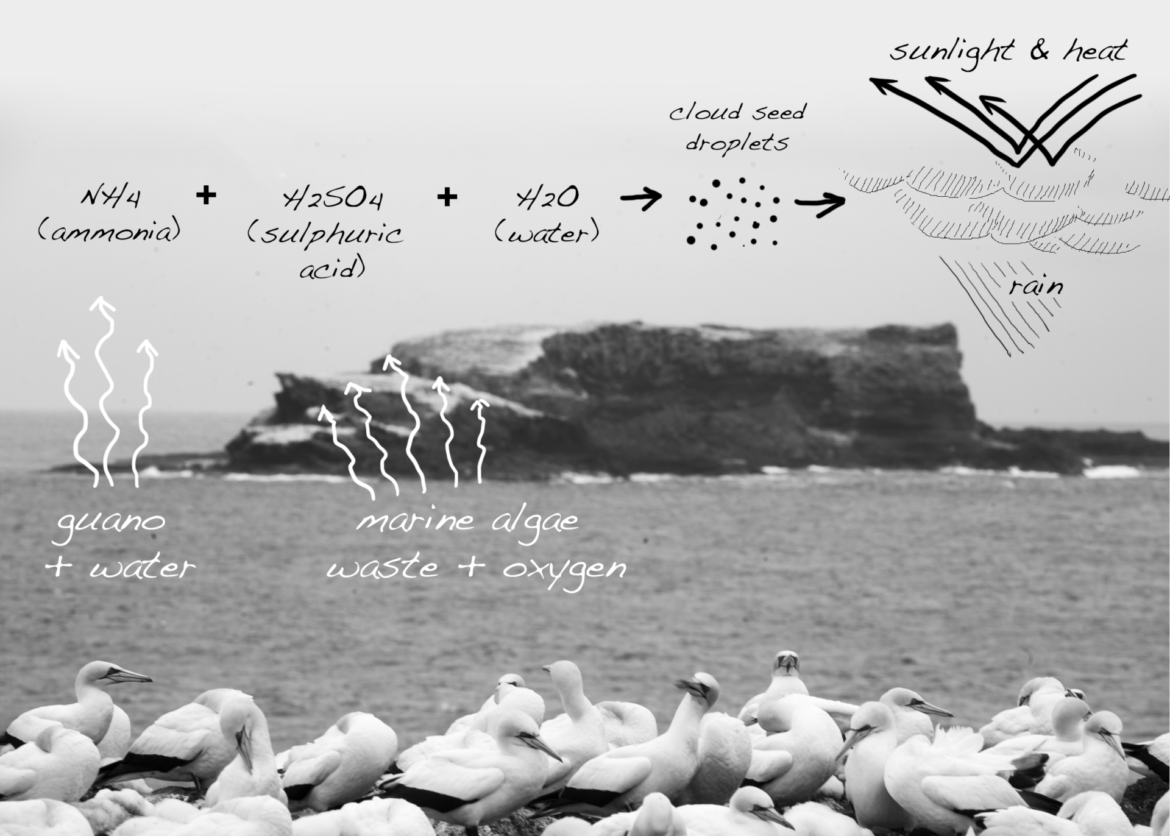
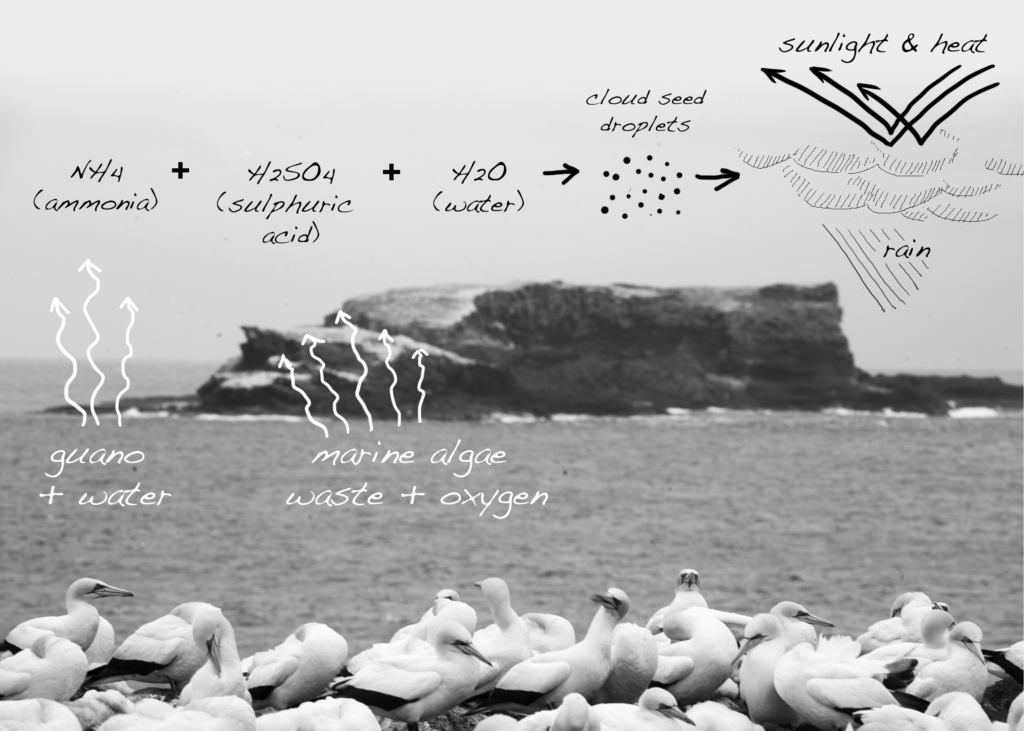
After brief rainfall in the heat of summer, the stench of ammonia over seabird colonies can be overpowering. Studies have found they can emit as much as 90kg of gaseous ammonia every hour, emitted as downwind plumes after rainfall.
Then there are ocean algae, that create a huge amount of a compound called dimethyl sulphide, that combines with atmospheric oxygen to make sulphuric acid.
When the acid mixes with the birds’ ammonia, it creates atmospheric particles that seed cloud-droplets. Ammonia production is highest in the tropics where conditions tend to be warmer and wetter[2] but authors of a 2016 paper in Nature Communications [3] even found the effect to be important at Arctic seabird colonies. Their results show how cloud seed-particles can grow to diameters sufficiently large to promote “pan-Arctic cloud-droplet formation” in the summertime. In other words, in the Arctic where ammonia emissions are relatively benign, seabird colonies are creating weather systems over the whole region. Not only that, the clouds they form, reflect sunlight, maintaining the cool ground temperatures.
Similarly, marine mammals excrete bioavailable ammonia as urea at several orders of magnitude higher concentration than surrounding seawater [4]. These and fish populations will also be part of the process.
By protecting seabird colonies, we are looking after rainfall systems that deliver water to our nations’ farmland.
1. Blackall, T., et al., Ammonia emissions from seabird colonies. Geophysical Research Letters – GEOPHYS RES LETT, 2007. 341.
2. Riddick, S., et al., Measurement of ammonia emissions from tropical seabird colonies. Atmospheric Environment, 2014. 89: p. 35–42.
3. Otero, X., et al., Seabird colonies as important global drivers in the nitrogen and phosphorus cycles. Nature Communications, 2018. 9.
4. Roman, J. and J.J. McCarthy, The Whale Pump: Marine Mammals Enhance Primary Productivity in a Coastal Basin. PLOS ONE, 2010. 5(10): p. e13255.