
The importance of the oceans, their wildlife and ecosystems
The land and oceans are part of one system: Earth. So when we ask, why are the oceans important? We’re asking about our own future. Life began in the ocean billions of years before the first plants or animals colonised land. Oceans regulate the state of our atmosphere because they are 99 per cent of the volume of living space for animals and wildlife is the mechanism that drives stability.
Climate change has always been the symptom of biodiversity loss … that’s to say, the breakdown of the complex connectivity between lifeforms that allows Earth to flex in response to changing conditions. Ocean wildlife has, for the large part, acted as a buffer against the most catastrophic effects and since about fifty million years ago, has kept our climate quite stable.
Industrial fishing only happened recently in our planet’s history and this reduction in the abundance of wildlife represents our greatest challenge for survival.
Below you will find a range of articles designed to inspire an understanding of the magnitude of animal impactWhat is Animal Impact? Without wildlife, Earth would not be habitable for humans, because it's animals that stabilise ecosystems. It’s a fundamental law of nature that animals (and humans) exist because we are the most likely lifeforms to minimise environmental chaos. Animal impact, therefore, is a measure of how much all wildlife is collectively responsible for creating a habitable Earth. The More on our oceans.
The importance of whales and dolphins in our oceans
What’s more important, the ocean or the land?
The importance we bestow on the land is anthropocentric because we live there. It’s naturally important to us that we protect it. Nonetheless, if life in the ocean dies, we suffer irreversible changes to land-based ecosystems and climate.
In this article, we take a look at many of the ways that land and oceans are linked together.
The answer to the question, ‘why are the oceans important’, is that we live on the land but the oceans regulate Earth’s temperature. The oceans are equally vital to the land we live on.
Seabirds
If you’ve been out this winter, you might have noticed an abundance of cormorants. Did you know, that Bayside cormorants are important for our whole …
Sharks and Rays
Why are sharks important? Is a question I put to the head of global conservation organisation a few years ago. They could not point to …
Latest posts about why the oceans are important
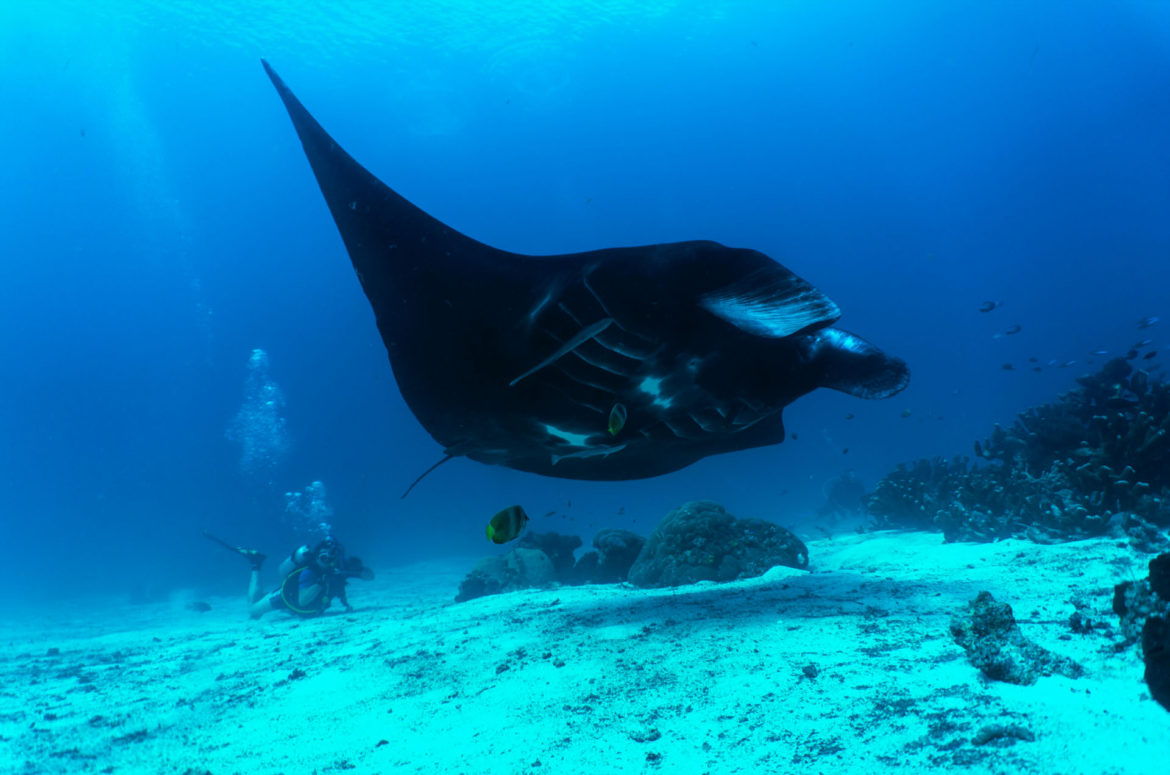
Physical drivers such as wind and currents determine the likelihood of marine vertebrate distribution but the consequence is better food security for people. This process is illustrated by the case of Oceanic Manta Ray abundance in Raja Ampat.
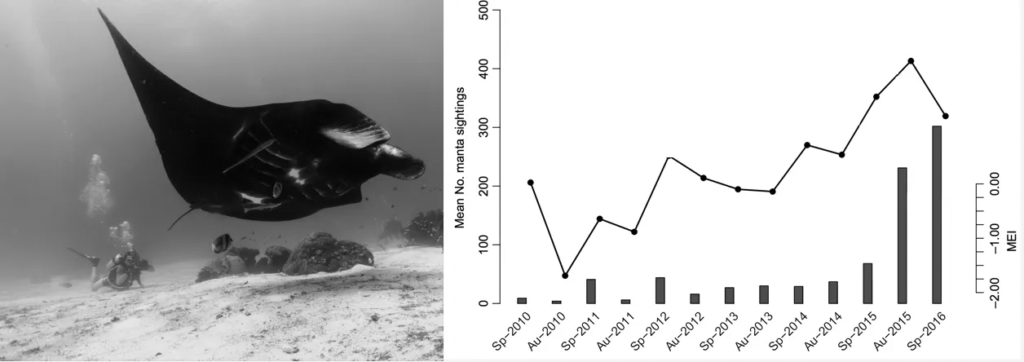
During El Niño, the Indonesian Through Flow strengthens. What the authors of the above paper didn’t realise is that 2015 was also a positive IOD year. This will have massively increased the intensity of upwelling along the continental shelf margins south of the island of Misool. As a result, the paper shows that manta ray abundance increased by several hundred-fold. (During the positive IOD in 2019, manta rays were also very abundant off Jerief in Raja Ampat, based on my own personal observations).
Coral reefs are non-mobile and micro-organisms such as algae and plankton can become significant sources of pollution if they emerge in large-enough quantities. If El Niño and positive IOD years increase in frequency, aggregations of marine vertebrates such as manta rays, become critical to ecosystem stability–that’s another way of saying “resilience”.
Because marine vertebrates are mobile, they respond by changing their distribution. The increase in manta rays is a response to increased nutrients and without them, die-off of plankton and algae, would result in increased surplus nutrient landing on coral reefs. Increased nutrient loads result in decreased coral diversity and reduced overall fish biomass, leading to reduced food security for local people.
So this is one clear example of how biodiversity works and how animals are the critical mechanism in ocean-coupled climate and food-security processes.
Conservation of manta rays needs to be part of Indonesia’s food security strategy.
Beale, C., et al., Population dynamics of oceanic manta rays (Mobula birostris) in the Raja Ampat Archipelago, West Papua, Indonesia, and the impacts of the El Niño–Southern Oscillation on their movement ecology. Diversity and Distributions, 2019.