

The story of available water
Water. Apart from food and shelter it’s the one thing we need to stay alive. And it’s abundant … or is it? Our planet is two-thirds covered in water. Perhaps its ubiquitous nature is what makes us imagine it to be an endless resource. Especially in the western world, where it emerges clean from taps, it’s rather taken for granted. The truth is, available water is rare. By that I mean the kind that supports life. Maintaining the life support function(Of an ecosystem). A subset of ecosystem processes and structures, where the ecosystem does something that provides an ecosystem service of value to people. More of water isn’t dependent on sewage treatment or even rainfall. It starts with wildlife. In this article we explore answers to the question: what is the outstanding role of wildlife in water cycles? To start, we must know where it comes from.
If you like this article, please think about supporting me by purchasing one of my books.

Where does water come from and how much is there really?
Planet Earth sits in the ‘goldilocks zone’ of our solar system. When our planet was formed, its spinning, iron-rich core generated magnetic forces that glued water to the planet’s surface. Slightly closer to the Sun and it would be too hot for this to happen, like on the planet Venus. Slightly smaller like Mars and there would be insufficient core magnetism to keep water at the surface at all.
Water is a remarkable molecule. It’s a universal solvent. Almost everything important to our lives dissolves in it, or reacts with it in some way, to create or contain other molecules we need to live.

But as water can give life, it can also take it away. Fluctuations in the Earth’s climate can go from extremes of heat to icy cold. The latter is more brutal. Just as glaciers carve mountains, ice-ages that sculpt new species’ assemblages. Speciation is the process of generating new life forms and happens fastest in the coldest extremes. But frigid temperatures also wipe out species more frequently, which is why the poles are less species diverse than the tropics.
All this means, the basis for our own appearance on the planet – a period of animal evolution faster than ever before – happened because Earth was just far enough away from the Sun, and that water was able to freeze and thaw. Meaning our margins for life are extremely narrow. Such is the undeniable power and fragility of nature. This is the first way water and animals are intimately connected but it’s only the start of an incredible story.
How much water are we really reliant upon?
‘Water, water, everywhere,
And all the boards did shrink;
Water, water, everywhere,
Nor any drop to drink.’
– Samuel Taylor Coleridge, The Rime of the Ancient Mariner
The largest amount of water on Earth isn’t drinkable. Saltwater cannot be drunk by people.

Water on the planet’s surface, whether ice, ocean, lakes or rivers, only accounts for about 0.02% of the Earth’s overall mass. Only 2.5% of that is freshwater and two-thirds is in permafrost, glaciers, ice-caps or underground. Underground aquifers support life, but this is prehistoric water. It’s not necessarily a renewable resource. For that, we rely mostly on available surface water (lakes, rivers, swamps and marshes). This remainder is only half a per cent.

Freshwater, ecosystems and animals
Life support depends on availability
What we tend to overlook is that the life support service we get from surface water is maintained, recycled, reconditioned, cleaned and returned to us, not because of its quantity but by the form it takes and its availability to us.
In a life support sense, water is unavailable if it:
- is in the form of extreme weather;
- is polluted;
- doesn’t get absorbed into soil;
- evaporates back into the atmosphere at a rate that is too high;
- doesn’t remain long enough in lakes and reservoirs; or
- returns too fast back into the sea.

The relationship of wildlife to climate
Even on Earth, life exists within the narrowest of margins.
Our fresh water needs are balanced only when animals are permitted to act for us. They keep water just available enough, but not too much that it would upset other parts of our climate system. Freshwater availability stabilises as climate stabilises and this has always been the consequence of animal impactWhat is Animal Impact? Without wildlife, Earth would not be habitable for humans, because it's animals that stabilise ecosystems. It’s a fundamental law of nature that animals (and humans) exist because we are the most likely lifeforms to minimise environmental chaos. Animal impact, therefore, is a measure of how much all wildlife is collectively responsible for creating a habitable Earth. The More.
Fossil fuel-induced climate has a different origin and process. Like groundwater, fossil carbon is prehistoric and largely non-renewable. That’s not to say fossil fuels aren’t an important consideration. But if we can agree to ignore them for a moment, we can find a way to understand the immense role of animals in the water cycle. We might even discover this is a larger part of the equation than we previously imagined.
The most remarkable part of this story is understanding why animals are important in the first place. For this, we need to revise our understanding of why we exist and how we became an integral part of our own water cycles.
Why did animals begin to regulate water cycles?
Animal life evolved because absorbing the Sun’s surplus energy into biological systems was the most likely outcome for a planet positioned in the goldilocks zoneThe Goldlilocks zone predicts the possibility of life anywhere in the universe. It's a set of thresholds scientists use to predict whether life is likely to exist on other planets. It is determined by factors such as concentration of oxygen, temperature and whether water can exist on a planet. More.
This concept is embedded in pattern forming (to read more about this you’ll need to dive into my first book, Wildlife in the Balance). The logic goes that for any system that is constantly being destroyed by outside forces, the most stable structural patterns will be the ones that survive longest. Millions of years is enough time for these structures to stack up, layer upon layer. Until eventually, the patterns become so complex and self-supporting, that any component (an animal) that isn’t contributing to the overall stability, dies out, leaving only the best of what remains.
The higher the diversity of species, the more densely these processes link together until the scaffolding becomes resilient to outside force. Our Sun can easily destroy life on Earth as we know and need it. It’s only the rise of land animals and the immense living structures that evolution created that has allowed our species to survive at all.
These structures that we are part of. The structures that enable life and buffer us against the worst extremes of our climate, became what we now refer to as ecosystemsHow ecosystems function An ecosystem is a community of lifeforms that interact in such an optimal way that how ecosystems function best, is when all components (including humans and other animals) can persist and live alongside each other for the longest time possible. Ecosystems are fuelled by the energy created by plants (primary producers) that convert the Sun's heat energy More.
How water and energy are linked
When ecosystems are functioning well, the energy from outside the system e.g. from solar radiation, is unable to completely collapse the status quo. This is the point at which the ‘climate’ can be said to have reached a steady, stable state.
Water is such a significant component in Earth’s energy cycles. It’s the planet’s primary thermal fluid. When wildlife is in the balance, the water cycle is optimised for all animal life, including people. The amount of energy flying around the atmosphere is enough to keep the planet within liveable bounds because animals have fostered the conditions for them to be able to use it wisely.

At first this can sound somewhat chicken-and-egg. Water availability for our lives can’t exist without animals building ecosystems; but animals couldn’t built ecosystems without water. Except water existed long before animals. Remember, the animals’ activities make the water cycles. We are merely a byproduct of a complex structure that evolved into the water system we picture today.
Saturn’s moon Enceladus is among the iciest in our solar system, with over 90% of its mass made of pure water. To the best of our knowledge, it doesn’t harbour life. Without animals, water can still exist but doesn’t provide life support for humans. Water availability has happened since modern animal-driven ecosystems stabilised within the narrow margins of a planet just the right size and proximity from the Sun. We survive because we live alongside incredibly diverse animal life, not because we simply have water.
If animals were not regulating water supply to create their own survival conditions, they (we) would have died out long ago. There is no other explanation that makes sense.
Ice ages plus millions of years of evolution
The water infrastructure humans need to survive in our modern age, therefore, has only been built quite recently. It’s no coincidence that our civilisation happens to be developing fastest right now.
It takes about 30 million years of uninterrupted speciation to reach this steady stable state, where the production and maintenance of life support is synchronised to animal needs. This pre-dated the evolution of the human species by about 29.8 million years but is only a fraction of the Earth’s history.

Typically, the period between ice-ages lasts only 10,000 to 30,000 years. Our species marched across the planet during the previous interglacial period. Right now we are living in the current ‘interglacial period’ and the last major glaciation peaked roughly 20,000 years ago. This is only a heartbeat in our history, let alone that of the Earth.
The comfort we enjoy today is a consequence of living in an interglacial period, following at least 30 million years of speciation. Only since Earth’s ecosystems evolved to maximum capacity, has freshwater become available. At least in the sense we think about it today, or sufficiently available, to support a complex animal like us.
Six ways animals make water available
Let’s explore some of the ways animal behaviour helps regulate water availability. However, when considering these, there are some important facts to keep in mind.
- First, the threshold for water to become life-supporting rather than destructive, exists within the narrowest of margins. This is determined by the actions of all wildlife working together.
- Second, it’s not just about the big creatures: beavers, wolves and so forth. The diversity of invertebrates in the soil is also astronomical. Wildlife is densely packed into every available place on Earth. Even when restoring the health of the top few centimetres of land they can make a world of difference to water cycles.
- Third, it’s not just the scale at which animals operate but also where they act and at what intensity. Animals gravitate to exactly the same places we do because we evolved as part of the same ecosystem structure. Which means we have the same needs … we are part of what creates self-sustaining life. So while there might seem to be a lot of empty space between creatures, the impact they have in the right places, is very significant to us.
- Finally, there is no single factor that yields life support. It’s the combination of all of the processes that wildlife maintain. The overall effect is far greater than the sum of its parts, as everything is linked. Science cannot hope to fully understand this, because the sum total adds up to an infinite and immeasurable value.
With this in mind, here are a few functions that wildlife perform that we can consider.
1. Animals alleviate flood risk
Despite being one of the driest continents on Earth, Australia is a megadiversity country where animals and people have long eked out an existence together. But Australia also has among the highest extinction rates on the planet. Without animals, soils aren’t recovering. Thin and dry soils have become water repellant, rather than absorbant.
If you happen to live near the coast, sea breezes push damp ocean air onshore and as these rise over nearby hills, it rains. In the absence of spongy soil, most drains off as floods and the rest immediately evaporates and gets blown back out to sea. Each warm day, the cycle continues, adding more and more moisture into the atmosphere (rather than soaking into the ground) which eventually falls as megastorms. These same effects occur in the Mediterranean and are devastating cities even in Europe.

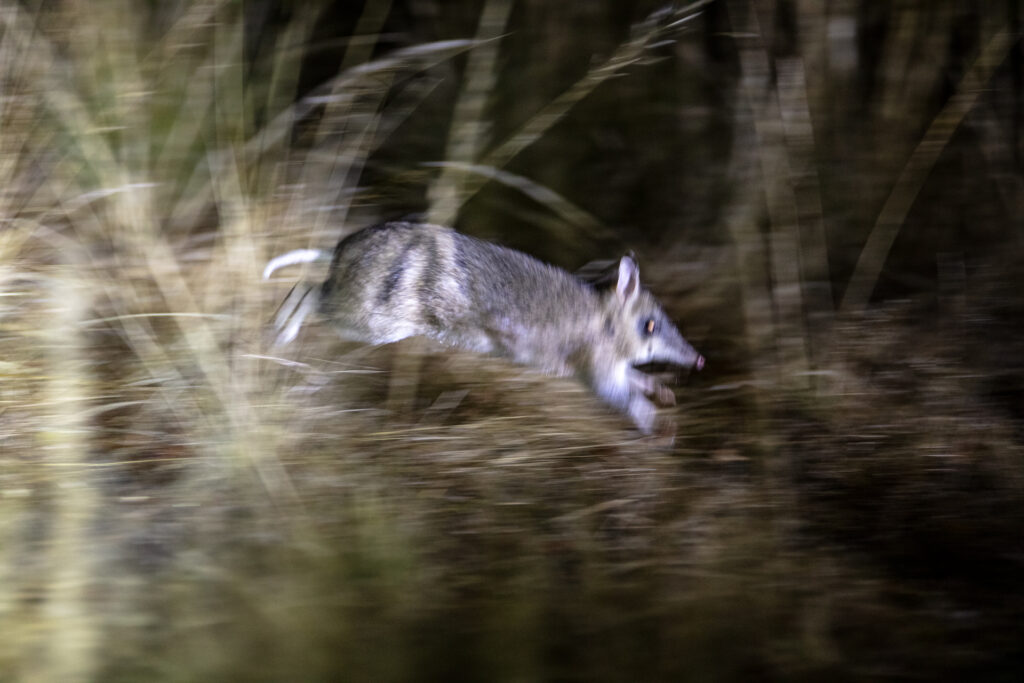
In Victoria, the Odonata Foundation’s reintroduction of Eastern Barred Bandicoots (an amazing conservationWhy is animal conservation important? Animal conservation is important, because animals are the only mechanism to create biodiversity, which is the mechanism that creates a habitable planet for humans. Without animals, the energy from today’s plants (algae, trees, flowers etc) will eventually reach the atmosphere and ocean, much of it as carbon. The quantity of this plant-based waste is so More story in itself) has reduced flood risk to near zero. These burrowing marsupials give the water a reason to soak into the ground and remain in the local system. Surface run off has been reduced so much that there has become no need for fence rebuilding despite the highest rainfall ever recorded.
Just five years of beaver activity in Norfolk, England, stored millions of litres of water and reduced flooding. The same effect has now been observed in London too, where a family of beavers has mitigated flooding of Ealing tube station and negated the need to spend millions of dollars building levees.
In every case, the resumption of these natural processes reduces taxpayer costs and increases overall biodiversityWhat is the definition of biodiversity? When we ask, what is the definition of biodiversity? It depends on what we want to do with it. The term is widely and commonly misused, leading to significant misinterpretation of the importance of how animals function on Earth and why they matter a great deal, to human survival. Here I will try to More too, leading to the redevelopment of nature’s climate and life support structures that evolved millions of years ago.
2. Animals alleviate drought risk
By allowing water to percolate into soil, it stays there longer. It slowly seeps through the ground layer into reservoirs and lakes, where it will last whole seasons. Soil loss is a result of loss of animals and integrates with the water cycle. Damp soil absorbs heat in the winter and remains cooler in the summer. It’s less prone to catching fire and retains its nutrientsEnergy and nutrients are the same thing. Plants capture energy from the Sun and store it in chemicals, via the process of photosynthesis. The excess greenery and waste that plants create, contain chemicals that animals can eat, in order to build their own bodies and reproduce. When a chemical is used this way, we call it a nutrient. As we More.
As soon as there is a hierarchy of animals, large and small, they build a three-dimensional sponge. Everything from large-footed mammals, to burrowing reptiles, ants, termites, springtails and more … all engaged in activities that slow water down and inhibit evaporation.
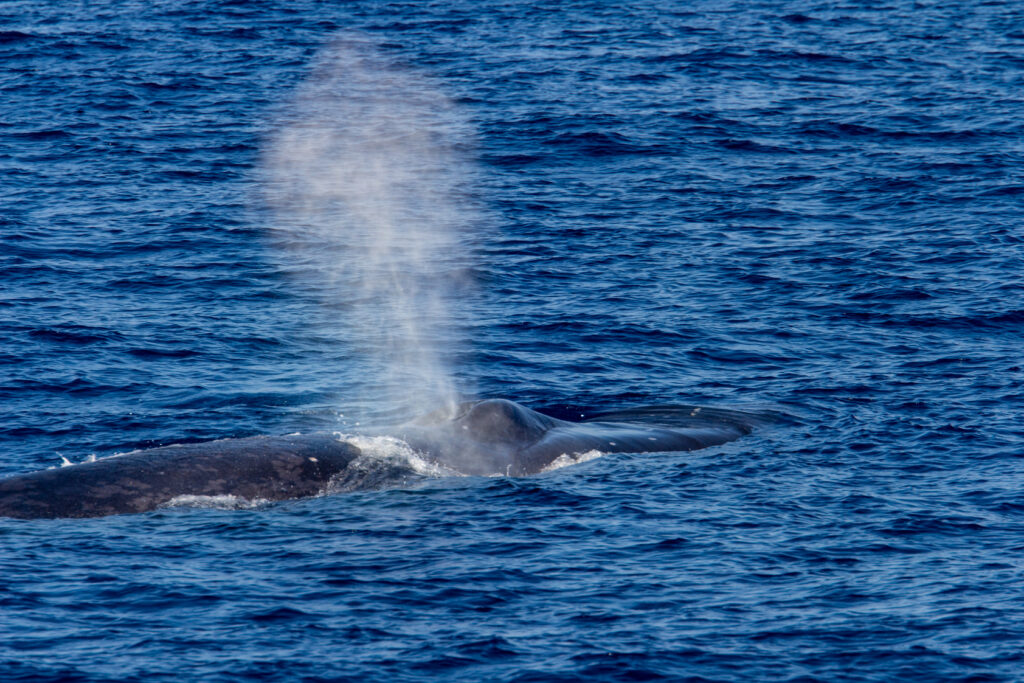
On a larger scale, the likes of Blue Whales, are responsible for a significant cooling of the oceans in places like the Banda Sea. Once again, they don’t work alone. It’s preposterous to suggest that a single species could have such a huge effect but ecosystems are regulated from the top down throughout. Without the large predators at the top (and blue whales are the largest predator on Earth), the system falls apart.
Blue Whales enable the amplificationAmplification (of nutrients and energy). Animals consume plants and other animals and in doing so, reintroduce important energy-containing nutrients back into the environment, at even higher concentrations and in patches. Amplification of energy is driven by migration and happens at every scale, from insects moving daily in and out of your vegetable patch, to African wildebeest herds and the seasonal More of life support processes, so myriad other creatures can assemble around them. And their combined actions make the difference between drought and flood on a continental scale. All it takes is a small variation in temperature to create droughts in Australia. When the whales swim up and down through thermal layers, it enables a whole set of ecosystem processes. The intensity of their actions depends on the extremes. If it gets too warm, they feed more vigorously, generating more cooling and visa versa. They act as the primer for a sensitive natural valve system, keeping atmospheric warming and cooling within manageable extremes.
3. Animals enable water filtration
Water is filtered through vegetation and that depends on animals. The health of forest ecosystems isn’t because of trees. For example, tropical forest nutrient declines without animals returning this to the ground’s organic layer. When the diversity of vegetation declines the water cycle is simplified and once again, creates imbalance in other connected systems.
In the absence of land animals, plants are thought to have caused the Devonian mass extinctionAnimal life hasn't existed for very long on planet Earth. In the last 500 million years, there have been five mass extinctions, defined as events that wiped out at least 75% of animal life. The Devonian mass extinction is considered to have been caused by the rise of plants on land, which polluted the oceans in the absence of animals. More. This led to the death of most ocean species and dawned a new age of land animals. Even today, the consequence of an overabundance of specific types of vegetation can be seen to cause excess nutrients polluting rivers and ocean.
In lowland forests like Borneo, the ‘black water’ is crystal clear, compared to the polluted rivers nearer cities where palm oil monocultures have replaced the animal-rich environment. Species like orangutans have literally shaped the forest to be the ideal place for them to live. In doing so, they have helped climate stabilise.

Improving soil moisture on grassland repairs soil microbial function, essential for farming. It can add fifty times more carbon, leading to richer grass, healthier livestock and higher crop yields. Seagrass beds, that are essential for global fisheries, are tended by Dugongs. Without them and their predator – Tiger Sharks – the system collapses, harming fisheries by reducing vegetation health.
The reintroduction of natural habitat for animals immediately and measurably increases farm productivity. The bandicoots mentioned earlier were released on a farm in Victoria, Australia and increased the profitability of sheep wool in just a few years by enhancing soil nutrients.
4. Animals reduce pollution
Animals do all of this without adding pesticides and pollution. This is because the water cycle, nutrientA substance that contains the raw materials for life. At a chemical level, these are contained inside compounds that are absorbed into the body and essential energy-containing molecules are extracted, so that energy can be transformed into other chemical processes that use the energy for living. More transfer(of nutrients) the thing that sets animals apart from plants, is that they can move. Some of the biggest migrations on Earth every day, are the movement of insects like caterpillars, from the stem of a plant to a leaf and back, before turning into butterflies and transferring the energy elsewhere. Large-scale migration of grazing animals and migratory songbirds moves More, physical and chemical nature of land, are all linked.
Biologically rich habitatsWhat is habitat for animals and people? Habitat, hence the word "habitable" describes the natural surroundings in which any animal (or human) lives, that houses basic needs, such as food and shelter. Vegetation, for example, is habitat for animals. On its own, habitat is not necessarily stable or sustainable, which is why it differs from an ecosystem. Habitat in disrepair More upstream from where we live, supply abundant freshwater which inhibits disease and illness. Melbourne, Australia, gets most of its water from the surrounding catchment. So too does Nepal’s Kathmandu. Most of the world’s water is dependent on healthy forests. In turn, the forest health depends entirely on nutrient regulation which is the purpose of wild animals.

The sacred eels of Waii on the island of Ambon in Indonesia are revered by villagers. The eels are an indicator of the health of the water emanating from the village’s limestone springs. Looking after the eels ensures the water which children drink and bathe in, isn’t polluted. The villagers know the eels are a sign of health. They also belong to a class of migratory fish that swim far into the Pacific and are essential for global nutrient transfer. Similarly, salmon transfer nutrients from the ocean to Alaska and are responsible for the health of boreal forest that border the rivers that they breed in.
5. Animals reduce our dependence on pesticides
When we create animal-poor monocultures, this homogenous environment will favour one or two species. We call these species pests but really they are just opportunists. These become abundant and begin to upset the balance of what we need to survive, so we turn to polluting chemicals to control them. These leach into waterways, causing untold pollution. The problem isn’t their presence, but the absence of any other wildlife in the balance.
The use of pesticides kills off animals. Whereas it’s widely known that maintaining even small number of animals reduces this need. Maintaining a small diversity of predators and prey has huge benefits, way beyond just biological control. As we’ve discovered already, the water cycle and impact from animals is integrally linked through processes that relate to soil, vegetation health and climate.
When the water cycle is more complete, this helps amplify the benefits for a wider variety of animals to survive. This diversifies the soil and vegetation and the opportunists don’t have as much chance to dominate. Pest management currently costs the world $423B a year yet reintroduction of animals can almost eradicate weed pest management for almost no cost. In turn, this means less polluted waterways.
6. Animals create clouds and weather
Seabird colonies are the single largest point source of ammonia on Earth. This combines with the byproducts of algae on the ocean surface and seeds clouds. The scale and intensity is considered sufficient to influence the weather over entire continental areas. Because of their impact on seasonal water availability colonies may be responsible for our farming efficiency, even far from the ocean.

The actions of rainforest animals, particularly herbivores, create the conditions for forest water cycles by physically altering rainforest structures. This is the case for the megafaunaThe largest animals that represent the top of the trophic pyramid. These are the final building blocks in ecosystem structures for maximum entropy production. Megafauna can be measured at any spatial scale. The largest animal that ever lived on Earth is the Blue Whale. In a grassland, spiders could be considered megafauna The term is generally reserved for animals larger More of the central African rainforest – the elephants and gorillas. Their presence makes the difference between this area being a carbon source or a carbon sink. More carbon means healthier soil and more water retention. The same can be said for orangutans in southeast Asia. The climate, farming and survival of whole nations of people in Europe, Australia, and beyond, are built on the back of the extraordinary ecosystem structures these creatures and their kind have built over millennia.
Animals offer a world of possibility for restoring water life support
Look after the animals so they can look after the land (and water)
Australia’s Traditional Owners arrived about 65,000 years ago and have oral history going back at least to the last ice-ageA period of reduction in Earth’s temperature of between about 4–7 degrees that resulted in the rapid expansion of ice sheets and glaciation of much of the Earth’s surface. More. Their wisdom can be summarised in one sentence from a traditional owner in Budj Bim World Heritage Area, western Victoria:
“The animals are here to look after the land; we are here to look after the animals” – read more in How to Survive the Next 100 Years: Lessons from Nature.
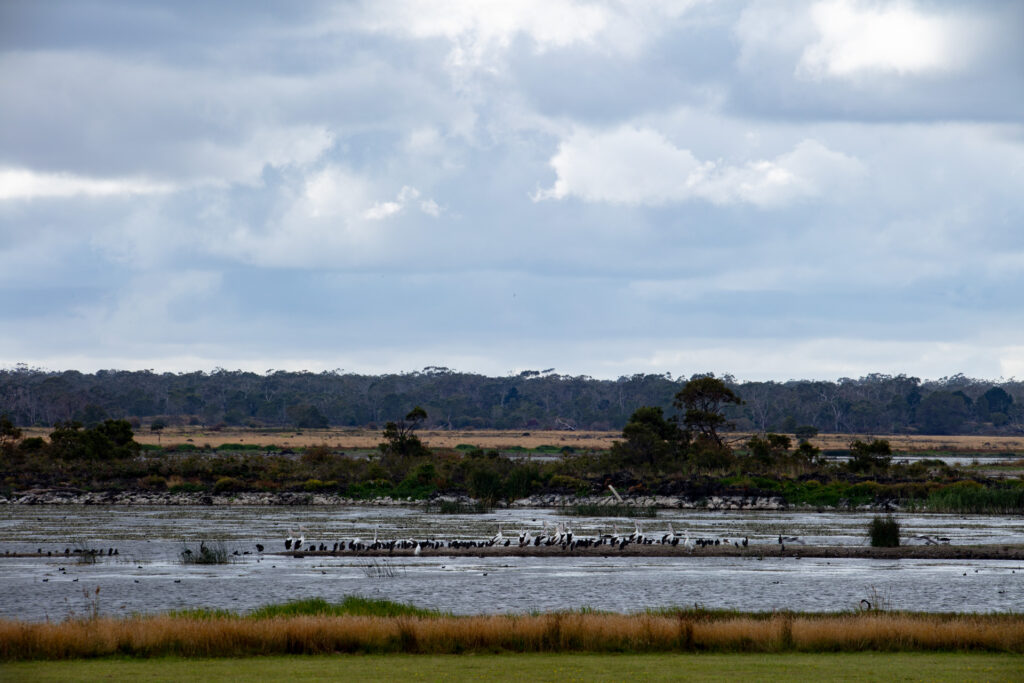
If we set our minds to it, we can restore all these interconnected needs. The science suggests that this takes just a few years and can become cost neutral. Often all it means is learning to live with nature. It doesn’t require compromising our standard of living at all. Far from it. It will reduce our cost of living.
The great news is that we still have the seeds from which to grow this outcome quickly. Even in the most extraordinary of circumstances, tiny patches of moist soil retain their ecosystem processes. Diversity of plants like orchids can survive 200 years of human urban encroachment, maintaining soil processes that began as far back as 55 million years ago. This is the resilienceReferring to an ecosystem’s ability to maintain a steady stable-state. The need to build resilience is entirely anthropocentric and symptomatic of ecosystems that are damaged or declining, leading to loss of ecosystem services on which humans depend. More of nature that we can use to our advantage. Animals are inherently adaptable and remarkably capable of repatriating our ecosystems and restoring lost function.
Humanity’s best hope
In fact, restoring nature (which means restoring wildlife-driven function) is thought to bring 7-30x more wealth to our economies than what we’re currently doing.
A 2012 paper in Nature found, there is evidence loss of species has already had a greater impact on our lives than most of the pollution issues we commonly take for granted. The glass half full interpretation is that restoring wildlife will have a far greater positive impact than anything else we can possibly imagine doing.
If we could click our fingers today and the whole world simply started protecting wildlife, we could fix most of our environmental problems within a decade. Why? Because we are an animal and we share the same basic needs and origins of life. Plus, our brains are coded to do this. We carry that wisdom with us. The difference is, that we cannot look after the land … only animals can do that.
As our ancestors have discovered more than once before … if we look after the animals, then the animals look after the land.